Your Complete Guide to the Map of Surface Ocean Currents: Understanding Global Circulation
Have you ever looked at a map of the world's oceans and noticed those sweeping, colorful arrows that seem to trace paths like invisible highways? Those lines represent the surface ocean currents—the powerful, wind-driven movements of water that shape our climate, guide marine life, and even influence your daily weather. In this guide, I’ll walk you through everything you need to know about reading and understanding a map of surface ocean currents. You'll learn what these currents are, how they form, why they flow in giant loops called gyres, and how to spot warm versus cold currents. By the end, you’ll never look at an ocean map the same way again.
What Exactly Are Surface Ocean Currents?
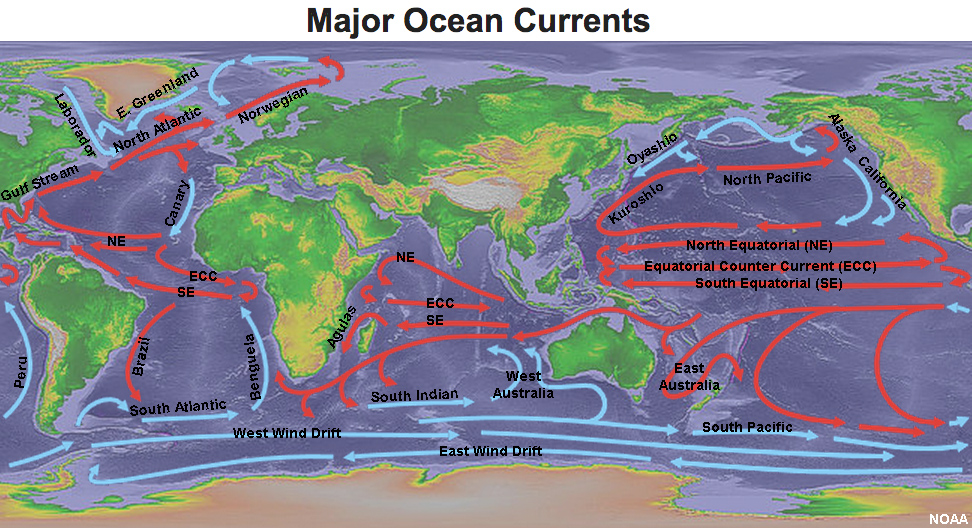
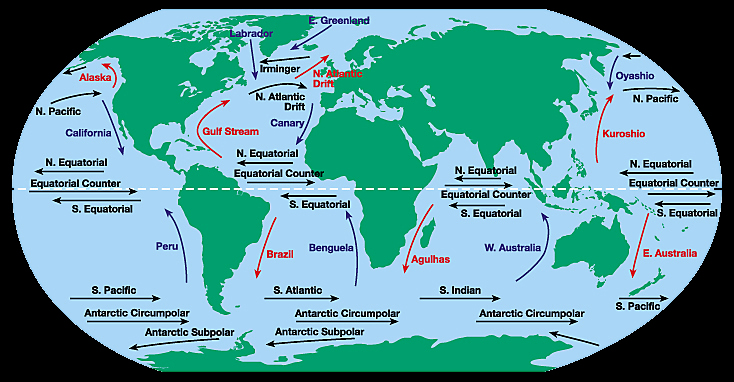
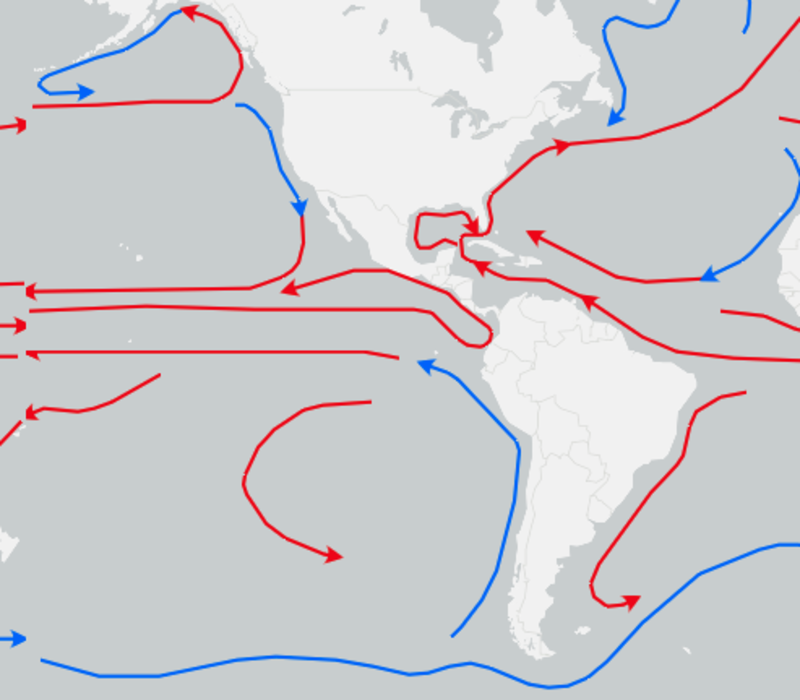
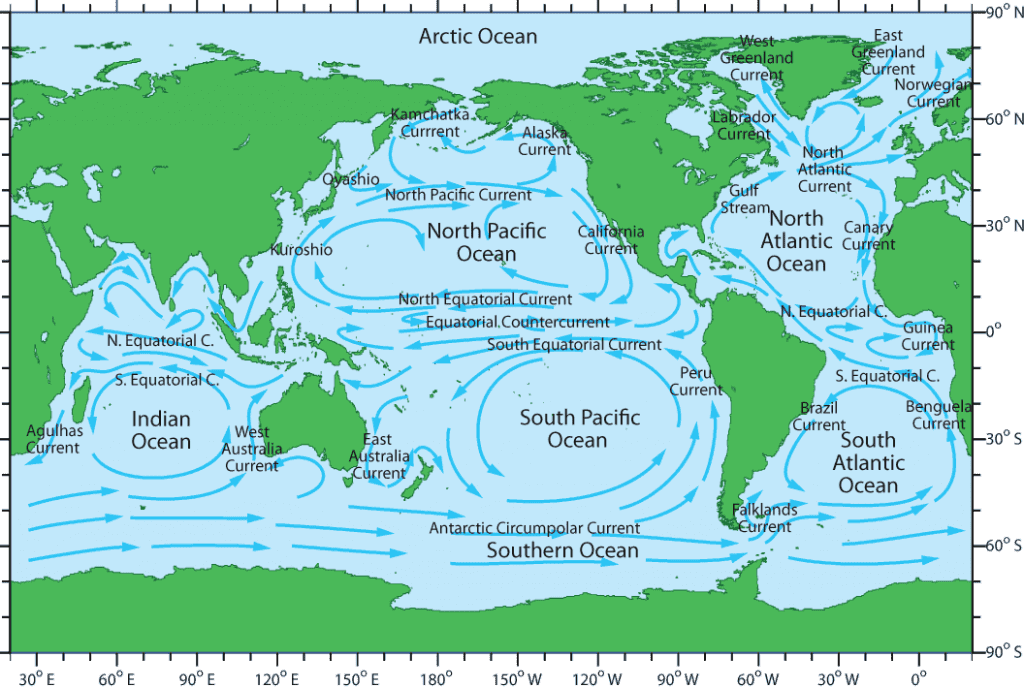
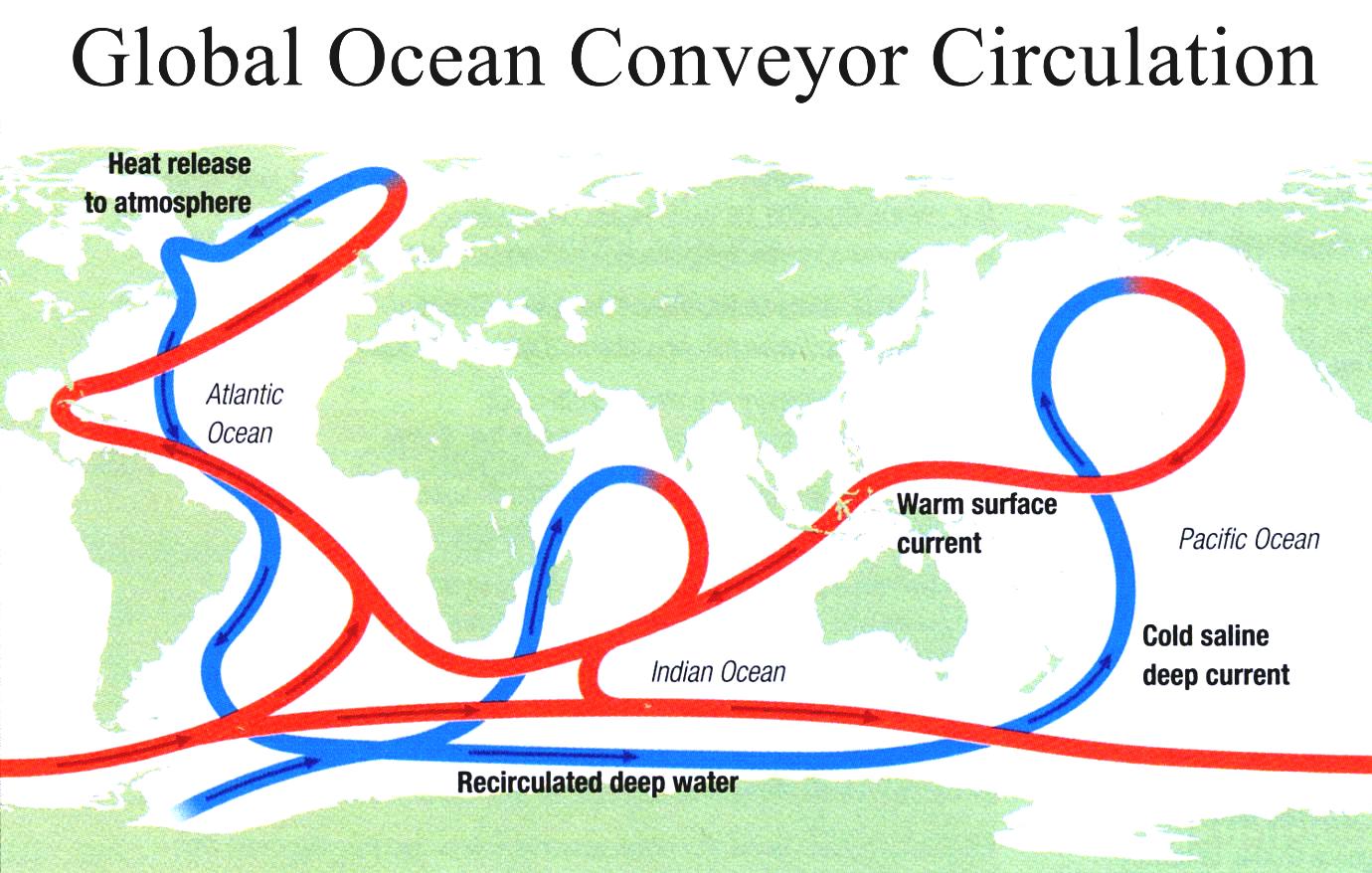
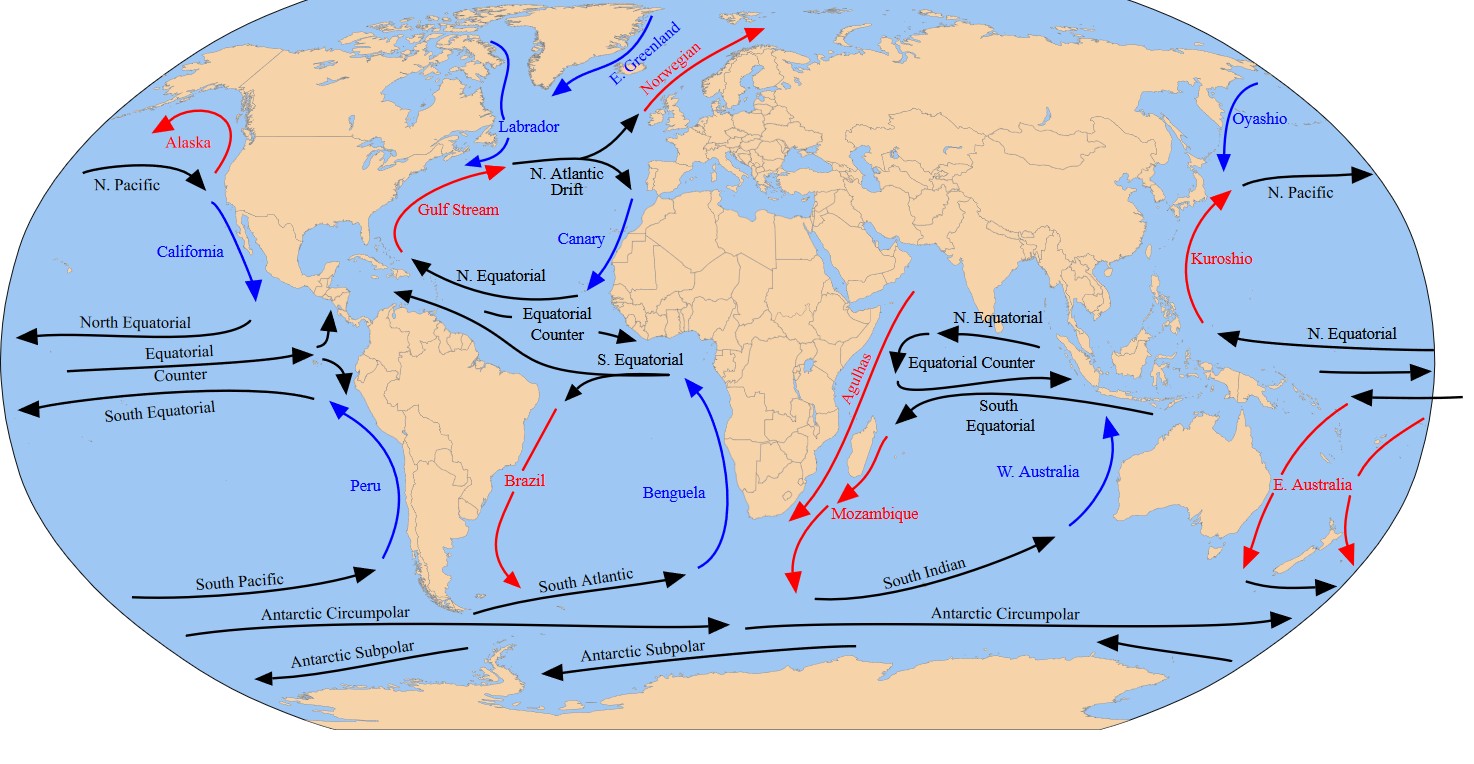
Surface ocean currents are the horizontal movements of water found in the upper 400 meters (about 1,300 feet) of the ocean. Unlike deep-water currents, which are driven by differences in density and temperature, surface currents are primarily pushed by the wind. Think of them as the ocean’s top layer, constantly being blown along by global wind patterns. On a typical map, these currents are shown as arrows—with the arrow’s direction indicating the flow path and often its thickness or color hinting at the speed or temperature of the water. The most famous examples include the Gulf Stream in the Atlantic and the Kuroshio Current in the Pacific.
The Great Gyres: Why Ocean Currents Form Circling Patterns
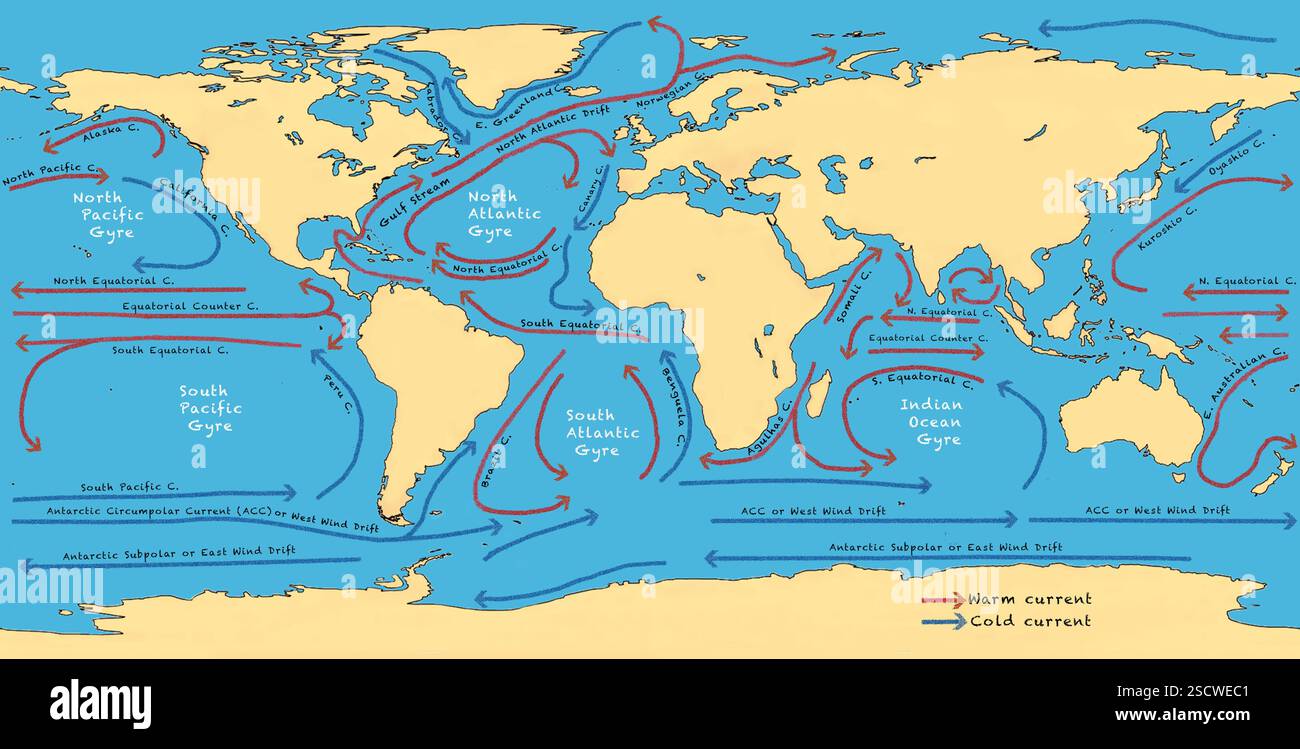
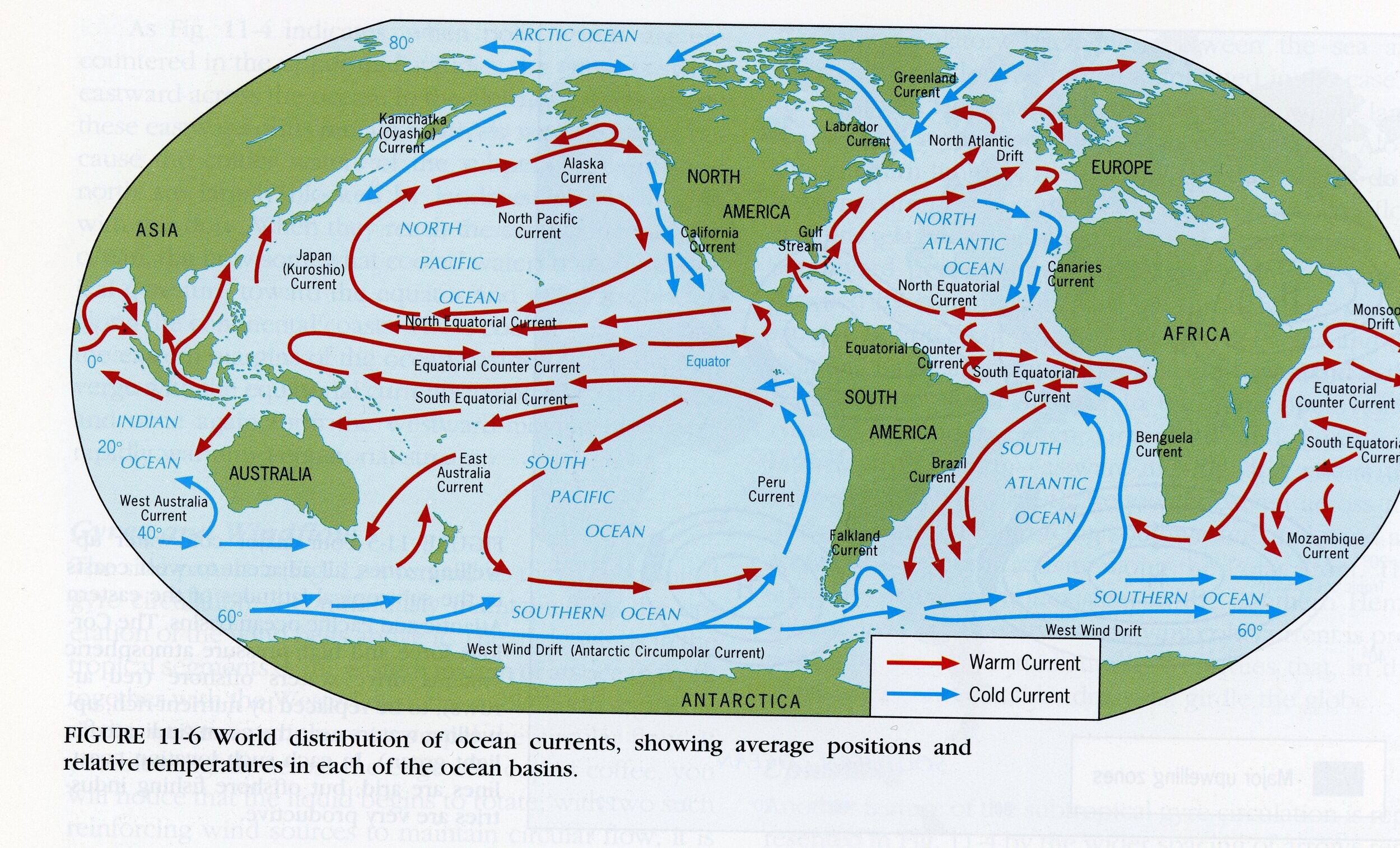
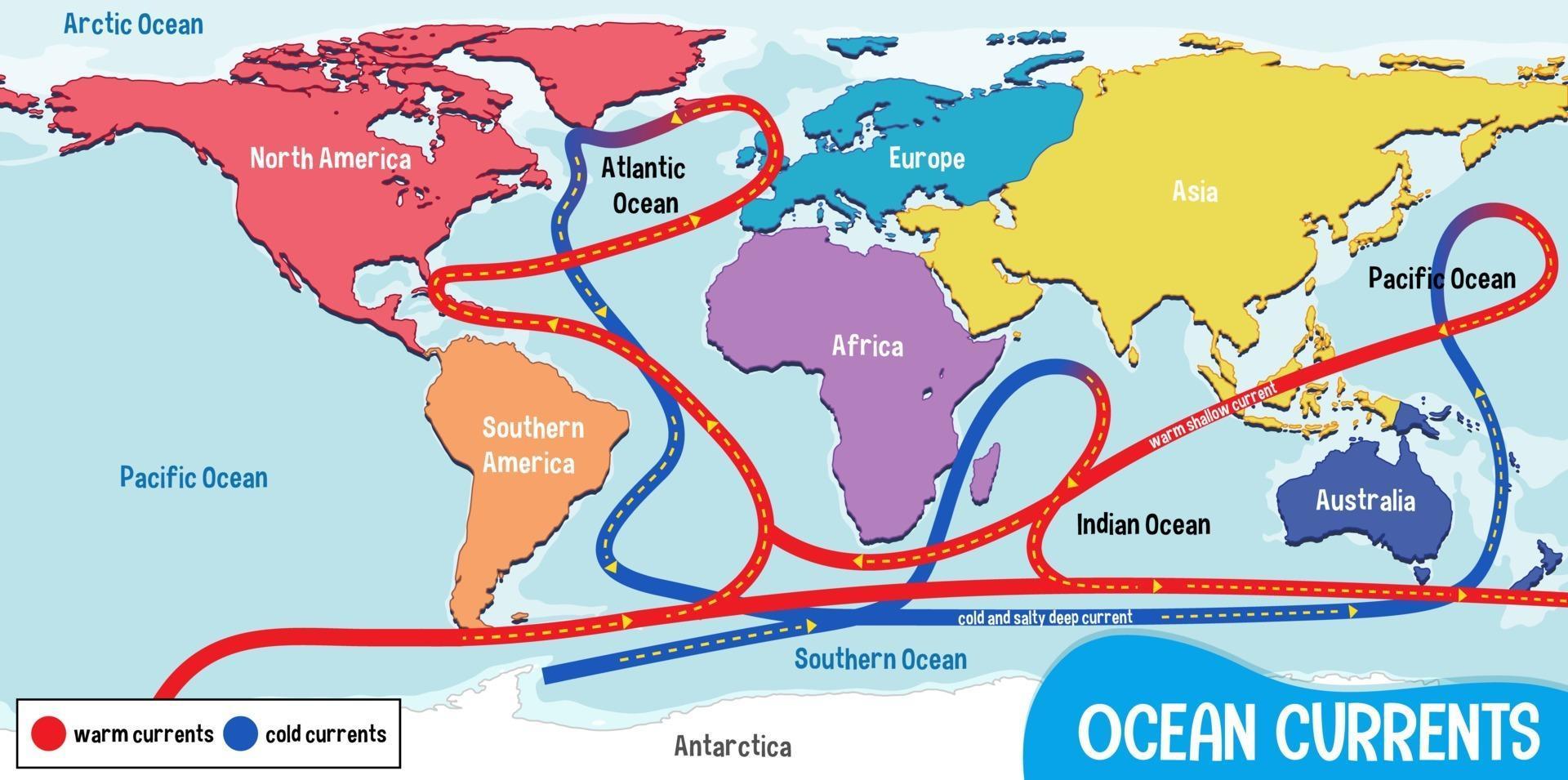
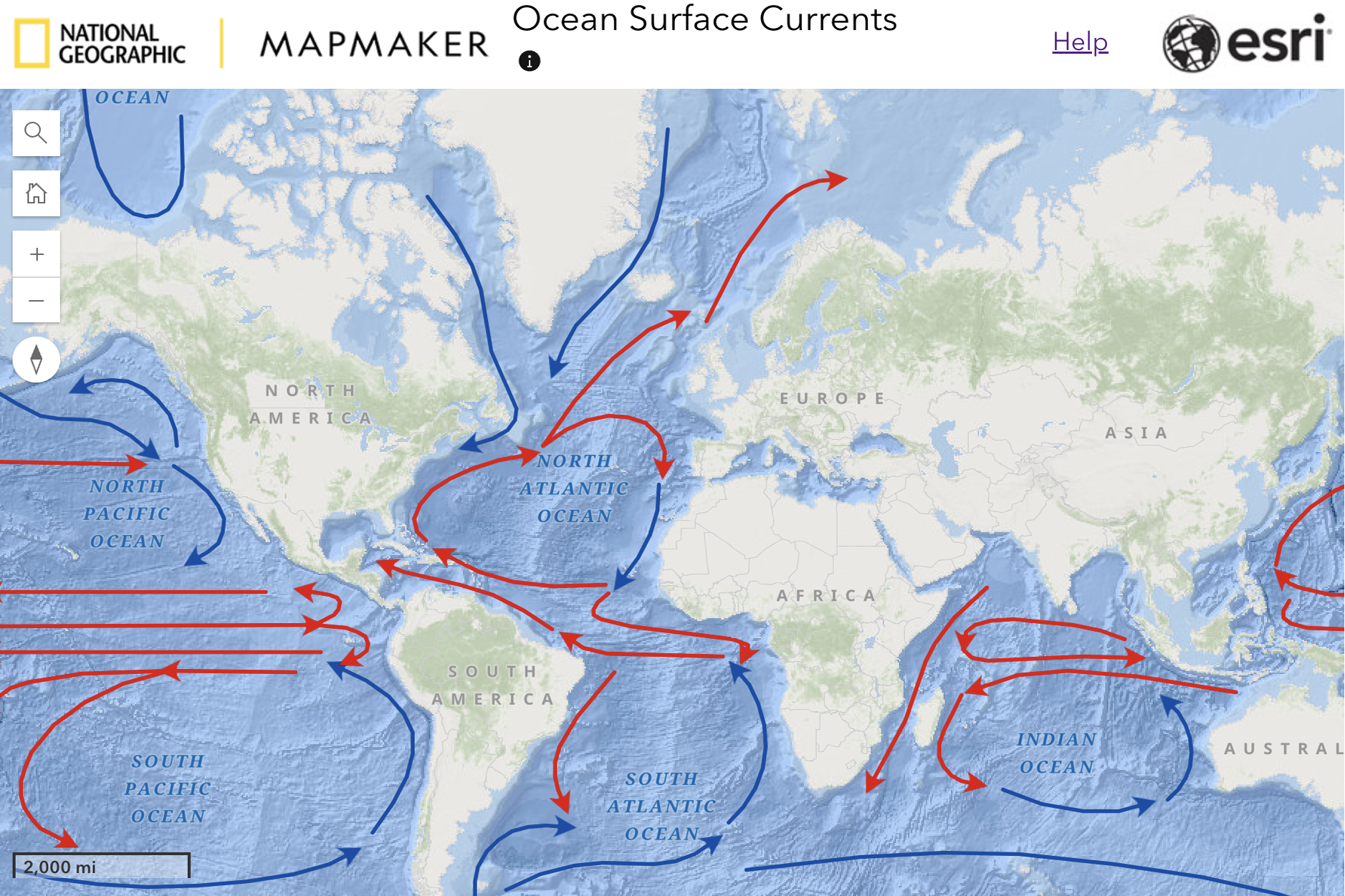
If you look at any detailed map of surface ocean currents, you’ll notice something striking: the major currents don't move in straight lines. Instead, they curve into enormous, clockwise or counterclockwise loops called gyres. These gyres are a direct consequence of the Earth’s rotation, thanks to the Coriolis effect. In the Northern Hemisphere, the Coriolis effect deflects moving water to the right, creating clockwise gyres. In the Southern Hemisphere, water deflects to the left, forming counterclockwise gyres. There are five main gyres: the North Atlantic, South Atlantic, North Pacific, South Pacific, and Indian Ocean gyres. Each one is like a massive rotating wheel of water, transporting heat and nutrients across entire ocean basins.
Warm vs. Cold Currents: Reading the Colors
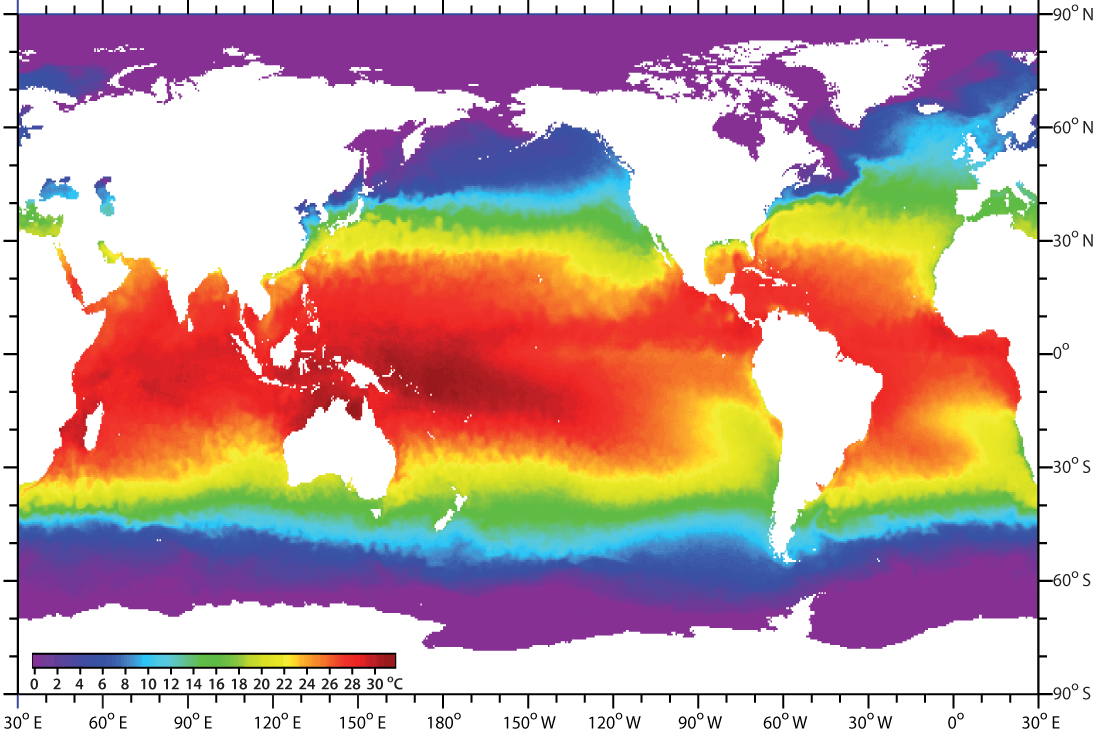
On most modern maps of surface ocean currents, color is your best friend. Warm currents—like the Gulf Stream, the Brazil Current, and the Kuroshio—are usually depicted in red or orange arrows. These currents originate near the equator, where the sun heats the water, and they carry that warmth toward the poles. For example, the Gulf Stream brings balmy Caribbean water all the way to the shores of Western Europe, making places like Ireland and England much milder than they would otherwise be. In contrast, cold currents are shown in blue or purple. They flow from polar regions toward the equator, cooling the air above them. Think of the California Current off the U.S. West Coast or the Humboldt Current along South America. These cold currents often create fog and cooler coastal climates, and they are incredibly rich in nutrients, supporting vast marine ecosystems like the anchovy fisheries off Peru.
How Wind Drives the Surface Flow
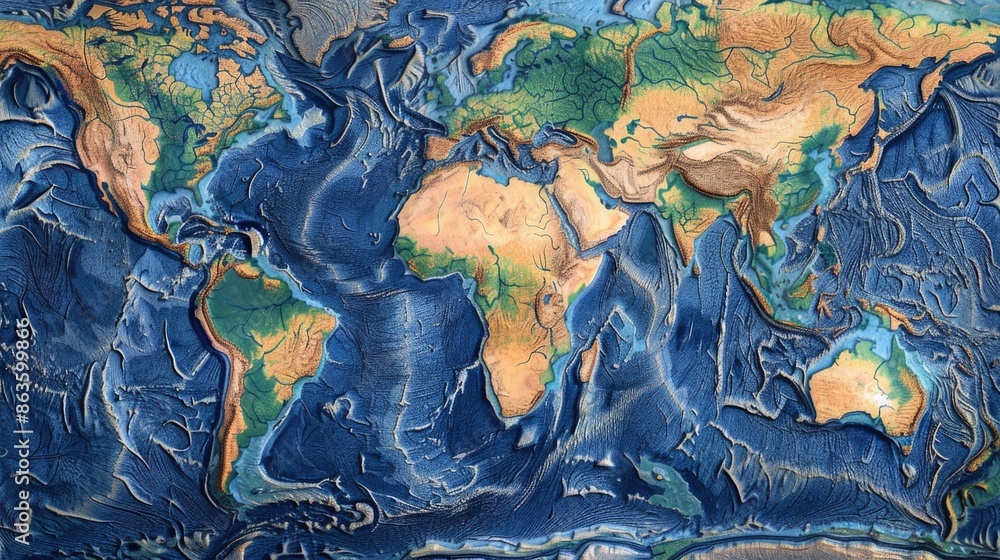
The engine behind most surface currents is the global wind belt. You have the trade winds blowing from east to west near the equator, the westerlies blowing from west to east in the mid-latitudes, and the polar easterlies near the poles. These winds push the ocean’s surface, creating friction that sets the water in motion. Interestingly, the water doesn’t move exactly in the same direction as the wind. Because of the Coriolis effect and something called Ekman transport, surface water is deflected about 45 degrees to the right of the wind direction in the Northern Hemisphere (and left in the Southern Hemisphere). This subtle but crucial shift is what ultimately drives the circular gyre patterns you see on the map.
Real-World Impacts: Why This Map Matters to You
Understanding a map of surface ocean currents isn’t just an academic exercise—it has real, tangible effects on your life. For one, these currents are major climate regulators. They redistribute heat from the equator to the poles, which influences everything from hurricane formation to seasonal rainfall. For example, El Niño events are tied to changes in Pacific surface currents and wind patterns. Additionally, if you’ve ever wondered why shipping routes follow certain paths, it’s because sailors use these currents to save fuel and time. The Gulf Stream, for instance, can cut a transatlantic voyage by several days. And if you care about marine life, knowing the currents helps explain why sea turtles migrate thousands of miles or where you might find plankton, fish, and even plastic pollution accumulating.
Reading the Map: Key Currents to Identify
When you first look at a comprehensive map of surface ocean currents, it can feel overwhelming. Here are the key currents to spot and remember. In the North Atlantic, find the warm Gulf Stream flowing north along the U.S. East Coast, then curving toward Europe, and the cold Canary Current off Africa. In the Pacific, look for the warm Kuroshio Current off Japan and the cold California Current along the U.S. West Coast. Down in the Southern Hemisphere, trace the warm Brazil Current down South America’s coast, and the cold Humboldt (or Peru) Current coming up the west side. Finally, in the Indian Ocean, note the unique seasonal reversal of the monsoon currents—they switch direction between summer and winter, a pattern influenced by the Asian monsoon winds.
Conclusion
A map of surface ocean currents is so much more than a collection of arrows—it’s a window into the dynamic, interconnected system that governs our planet’s climate, ecosystems, and even human history. By learning to recognize the gyres, distinguish warm from cold currents, and understand the role of wind and the Coriolis effect, you gain a deeper appreciation for the forces shaping the world around you. Next time you see an ocean current map, whether online or in a classroom, take a moment to follow the flow of water from the equator to the poles. You’re not just looking at lines on a page; you’re tracing the planet’s lifeblood.
Surface Ocean Currents Map

Surface Ocean Currents Map
Ocean Currents Map Illustrated Map Showing Coastal Ocean Current
Ocean Currents Map Illustrated Map Showing Coastal Ocean Current
Ocean Currents: The Hidden Force Keeping Marine Life Alive - Marine
Ocean Currents: The Hidden Force Keeping Marine Life Alive - Marine ...
Major Oceanic Surface Currents Prominent Features In This Map Of The

Major Oceanic Surface Currents Prominent features in this map of the ...
Surface Currents Diagram Great Ocean Currents « World Ocean Review

Surface Currents Diagram Great Ocean Currents « World Ocean Review
Ocean Currents Animation
Ocean Currents Animation
Currents, Waves, And Tides | Smithsonian Ocean

Currents, Waves, and Tides | Smithsonian Ocean
Map Of Ocean Currents World Ocean Color Icon Vector Illustration
Map Of Ocean Currents World Ocean Color Icon Vector Illustration ...
Ocean Currents Explained: The Powerful Forces Shaping Our Seas - Marine
Ocean Currents Explained: The Powerful Forces Shaping Our Seas - Marine ...
Ocean Motion : Background : Wind-Driven Surface Currents- Gyres

Ocean Motion : Background : Wind-Driven Surface Currents- Gyres
Ocean Currents Map Worksheet How Many Oceans And Seas | Oceans Are
Ocean Currents Map Worksheet How Many Oceans And Seas | ... Oceans Are
Surface Currents Diagram Great Ocean Currents « World Ocean Review

Surface Currents Diagram Great Ocean Currents « World Ocean Review
9.4: Surface Currents - Geosciences LibreTexts
9.4: Surface Currents - Geosciences LibreTexts
Surface Currents Diagram Great Ocean Currents « World Ocean Review
Surface Currents Diagram Great Ocean Currents « World Ocean Review
Surface Currents Diagram Great Ocean Currents « World Ocean Review

Surface Currents Diagram Great Ocean Currents « World Ocean Review
Global Currents Map

Global Currents Map
Dymaxion Map: Ocean Currents | Story.Earth

Dymaxion Map: Ocean Currents | Story.Earth
Widows To The Universe Image:/earth/Water/images/surface_currents_lg.jpg
Widows to the Universe Image:/earth/Water/images/surface_currents_lg.jpg
Surface Currents Diagram Great Ocean Currents « World Ocean Review
Surface Currents Diagram Great Ocean Currents « World Ocean Review
Global Currents Map
Global Currents Map
Why Are Ocean Currents Important? | Ocean Blue Project
Why are Ocean Currents Important? | Ocean Blue Project
Ocean Currents Map Blank
Ocean Currents Map Blank
Animated Ocean Currents Map Shows Currents At Various Depths

Animated Ocean Currents Map Shows Currents at Various Depths
Ocean Currents Map • Ocean Cleanup Organizations The Ocean Cleanup

Ocean Currents Map • Ocean Cleanup Organizations The Ocean Cleanup ...
Which Ocean Surface Currents Are Relevant To Skippers In The Global

Which ocean surface currents are relevant to skippers in the Global ...
OCEAN CURRENTS UPSC
OCEAN CURRENTS UPSC
Surface Currents Diagram Great Ocean Currents « World Ocean Review

Surface Currents Diagram Great Ocean Currents « World Ocean Review
Global Ocean Surface Currents
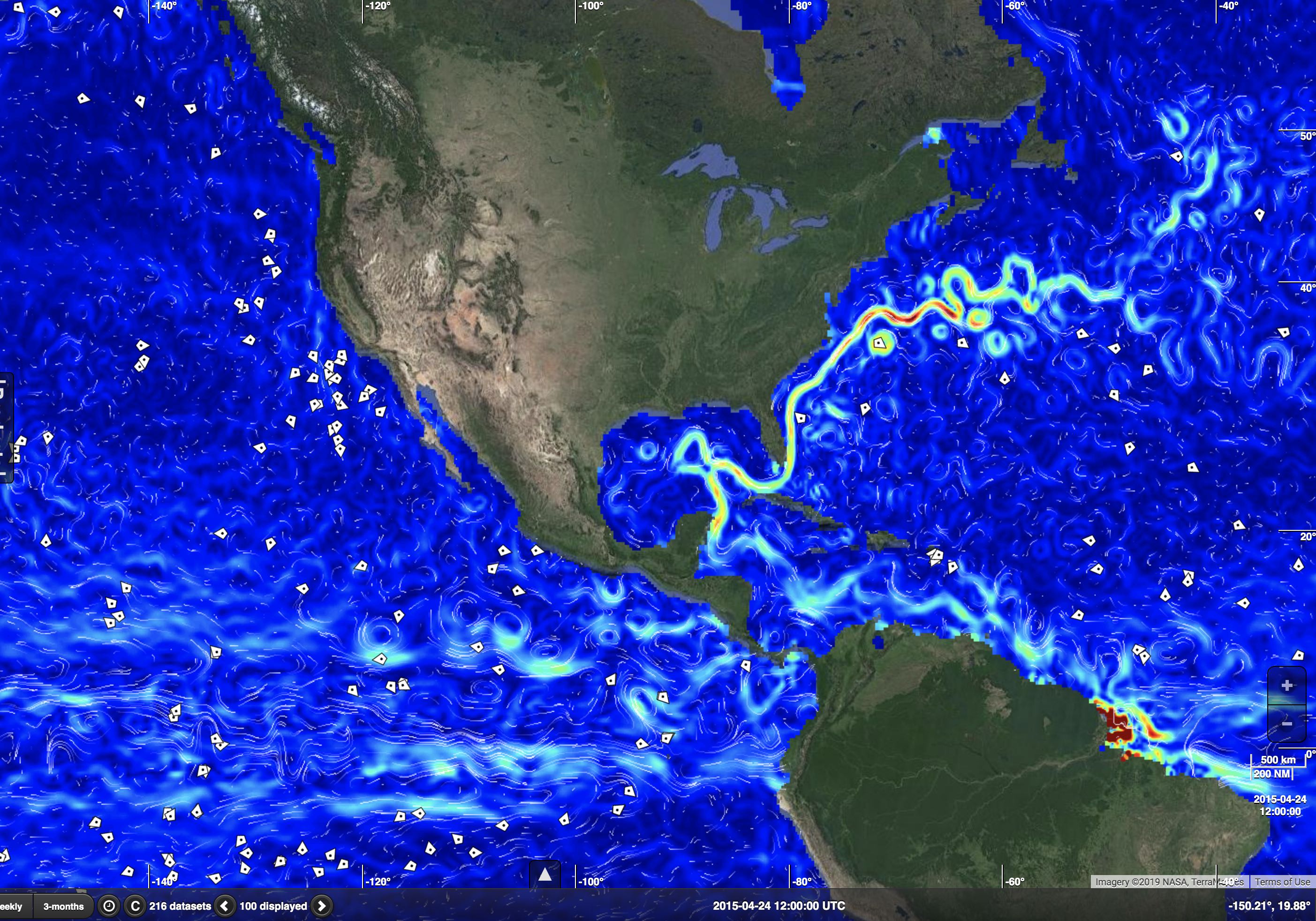
Global Ocean Surface Currents
Surface Currents Diagram Great Ocean Currents « World Ocean Review

Surface Currents Diagram Great Ocean Currents « World Ocean Review
Ocean Currents Map Illustrated Map Showing Coastal Ocean Current
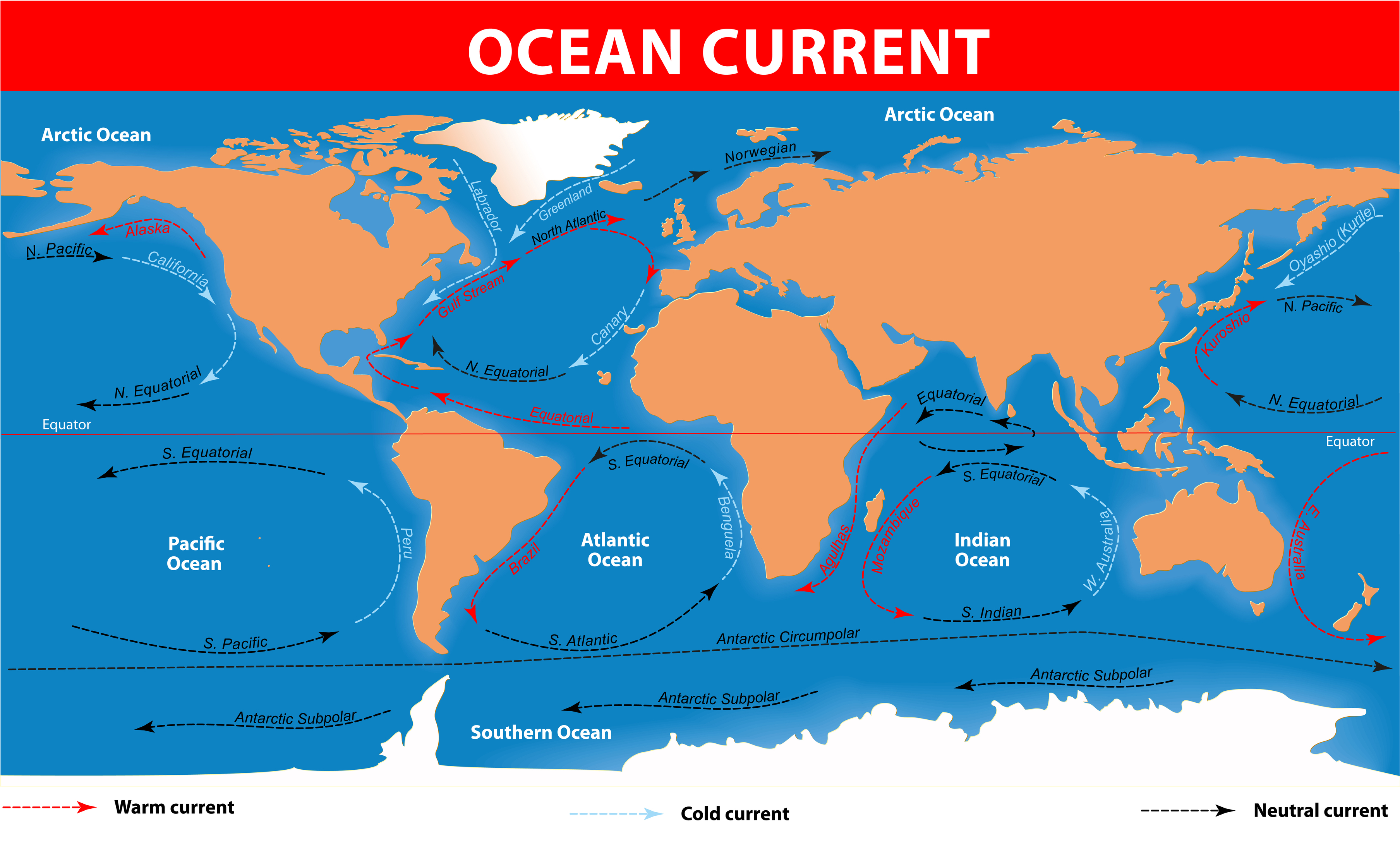
Ocean Currents Map Illustrated Map Showing Coastal Ocean Current
Ocean Currents: Map, Types, Causes & Key Facts – UPSC

Ocean Currents: Map, Types, Causes & Key Facts – UPSC
Surface Currents Diagram Great Ocean Currents « World Ocean Review
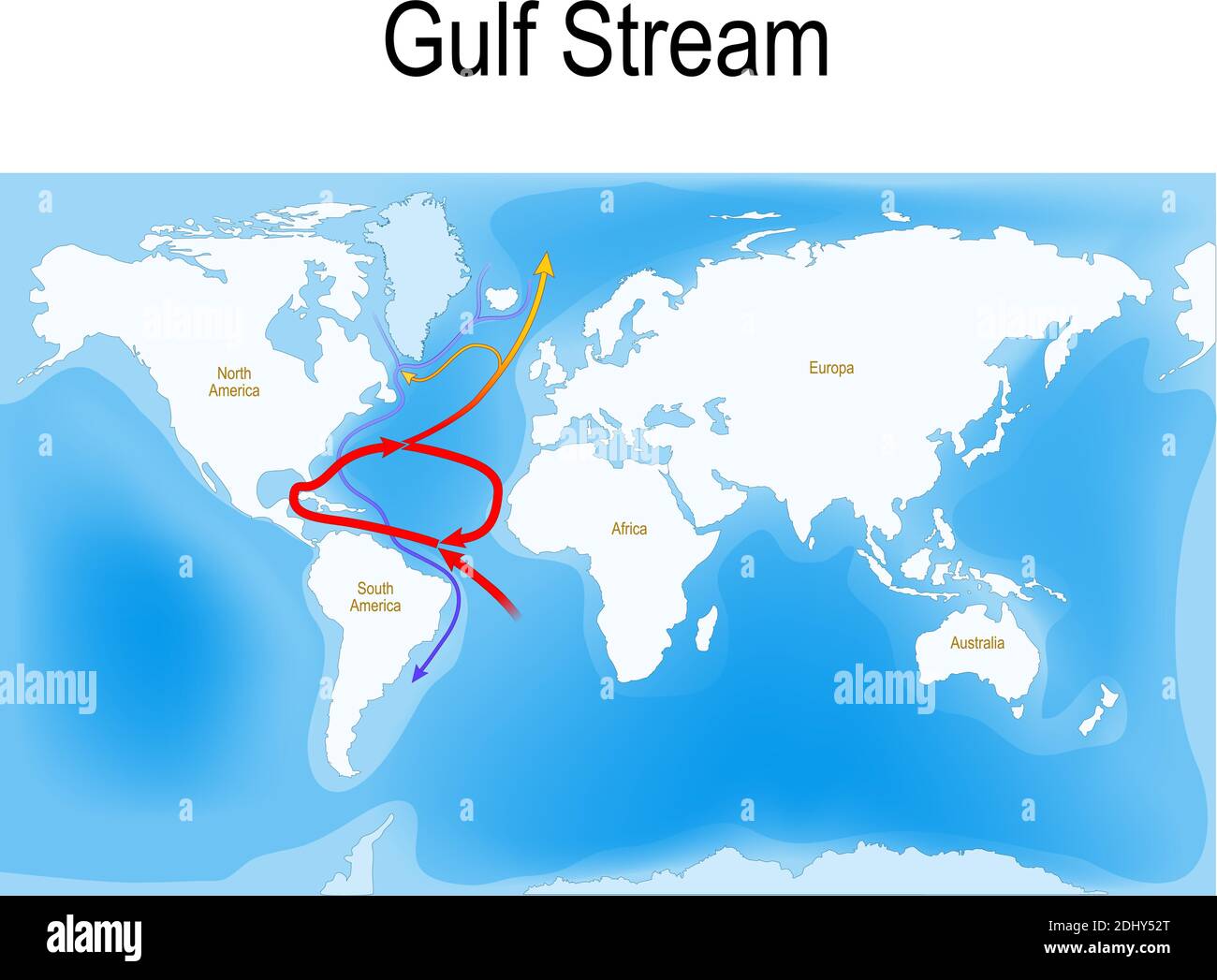
Surface Currents Diagram Great Ocean Currents « World Ocean Review
Global Ocean Currents Visualization: A Detailed Map Of The World S

Global Ocean Currents Visualization: a Detailed Map of the World S ...