Exploring the South America Physical Features Map: A Comprehensive Guide to the Continent’s Geography
This guide provides an in-depth look at the physical features of South America, as illustrated by a detailed physical map. You will learn about the continent’s major mountain ranges, river systems, plains, plateaus, and coastal regions, understanding how these landforms shape the climate, ecosystems, and human activity across the continent. By the end, you will have a clear mental map of South America’s diverse and dramatic geography.
The Andes Mountains: The Backbone of South America
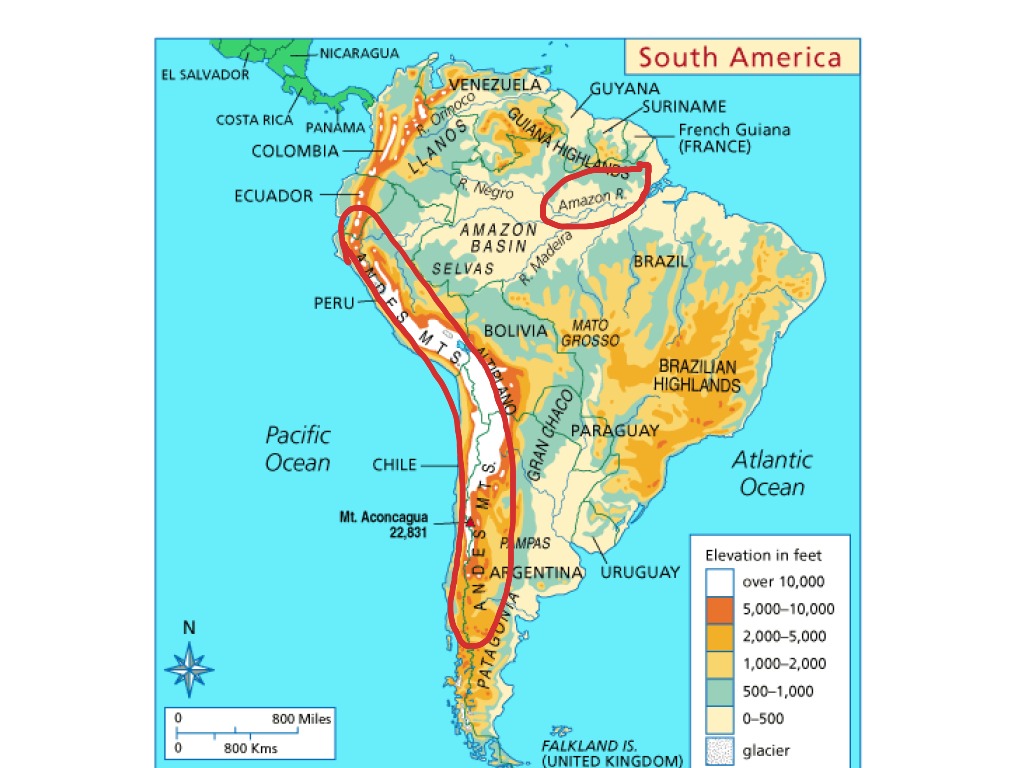
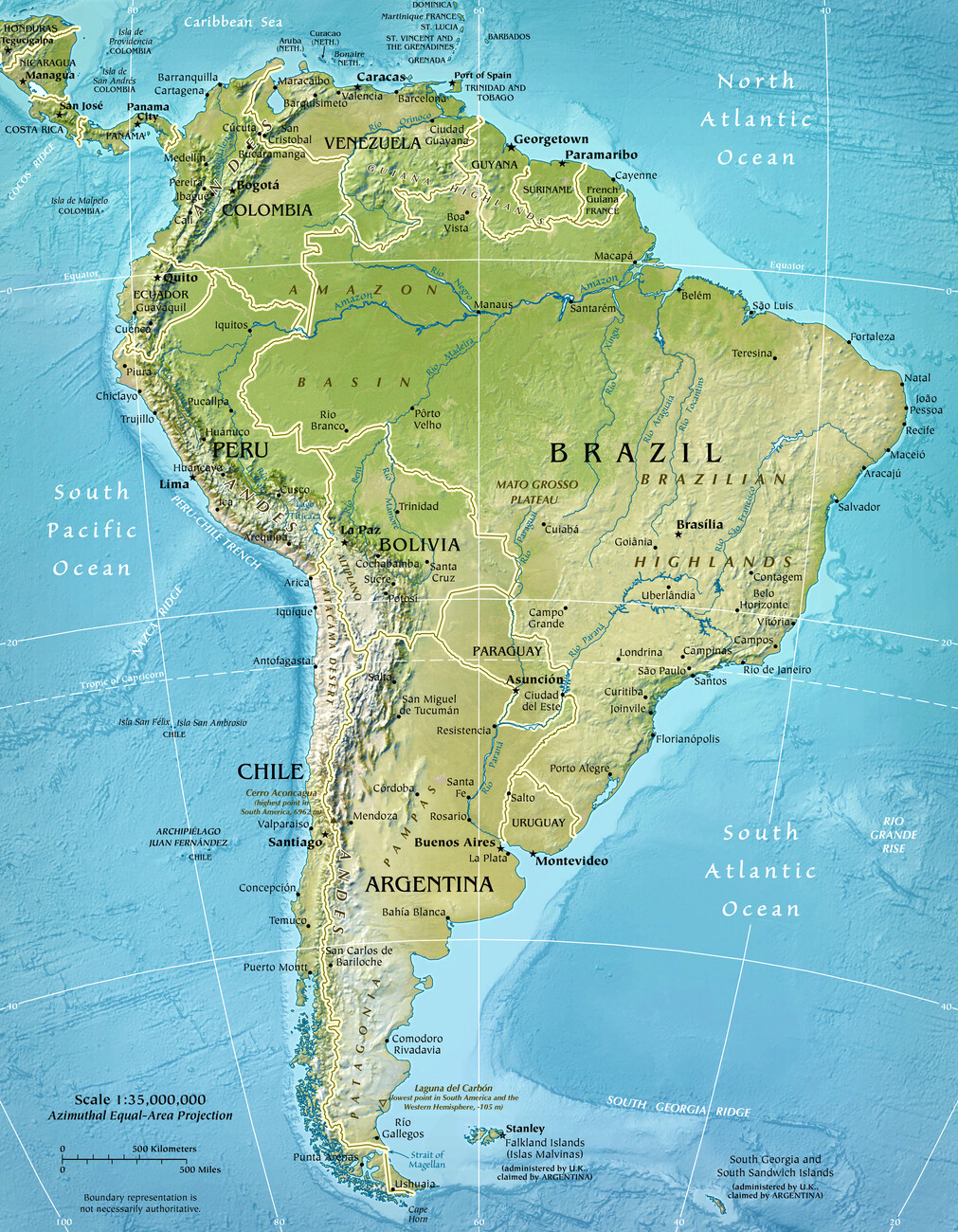
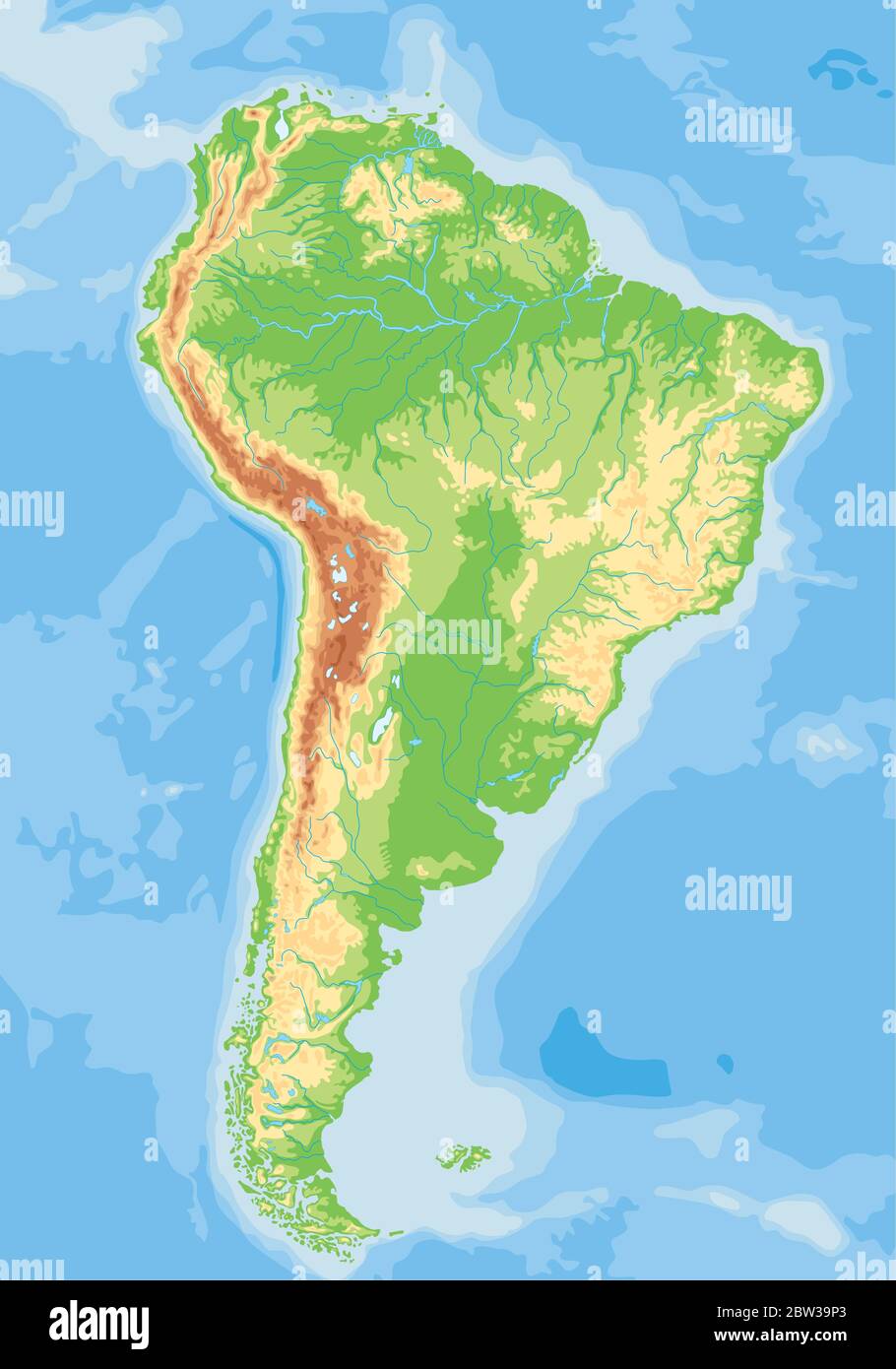
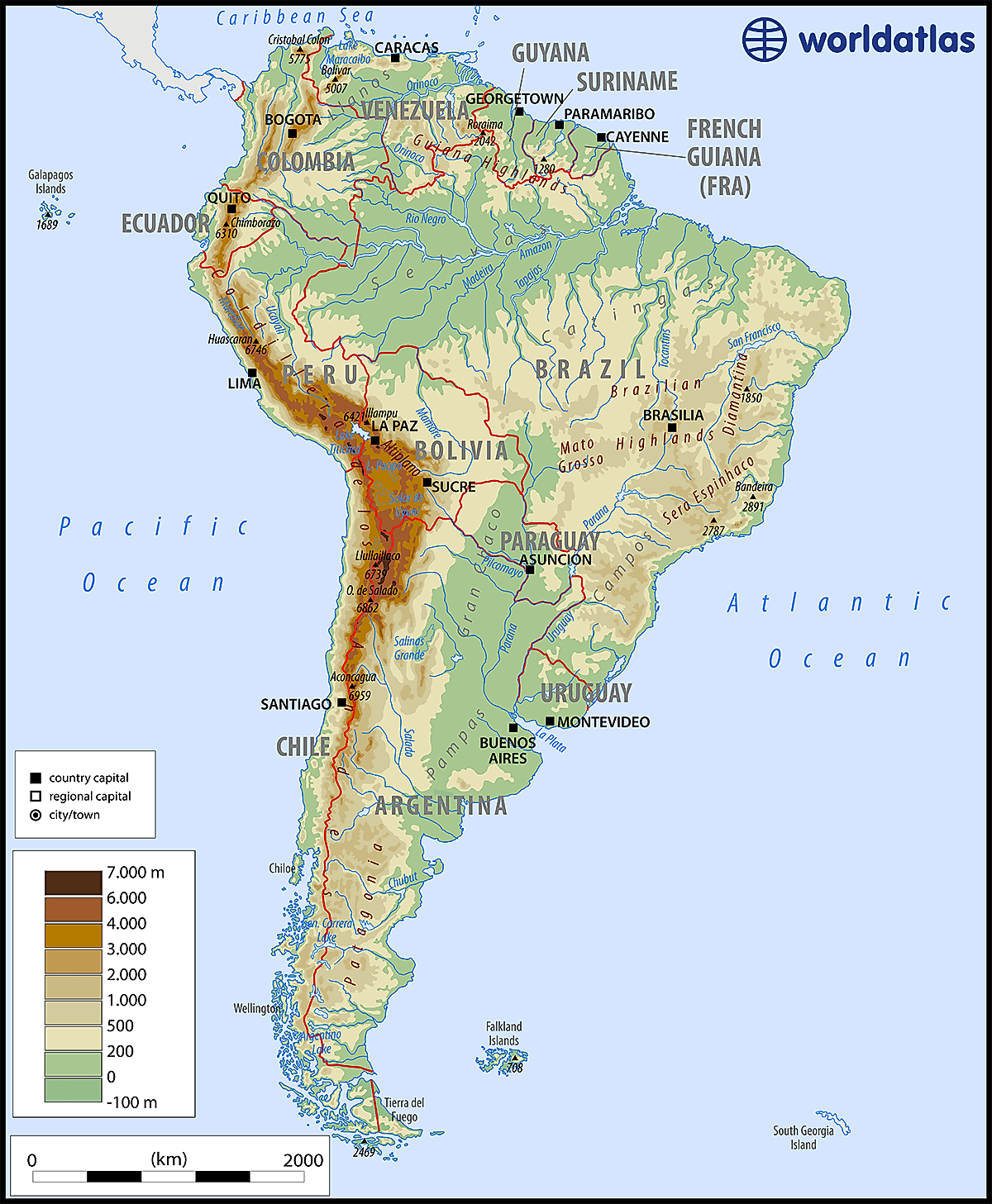
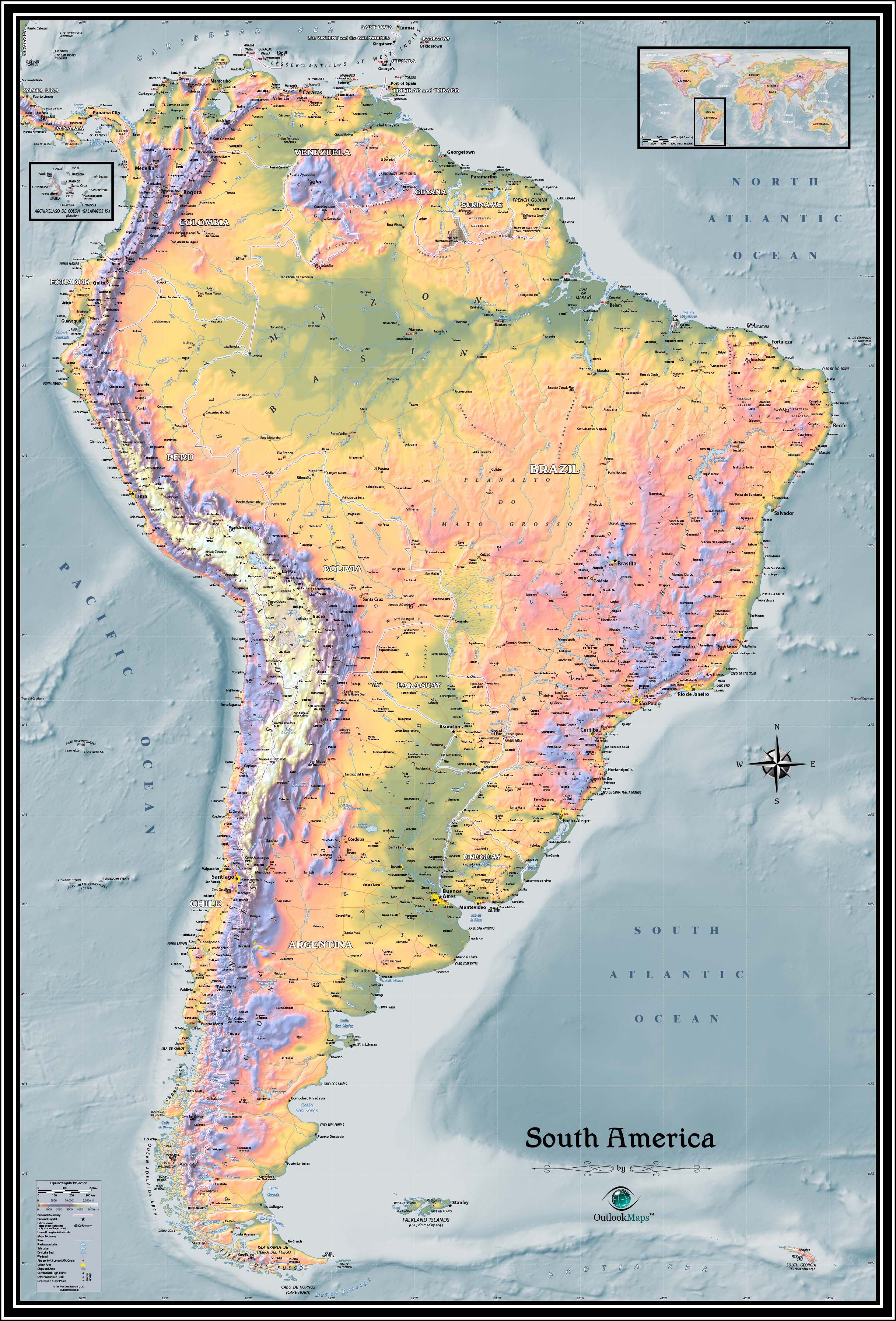
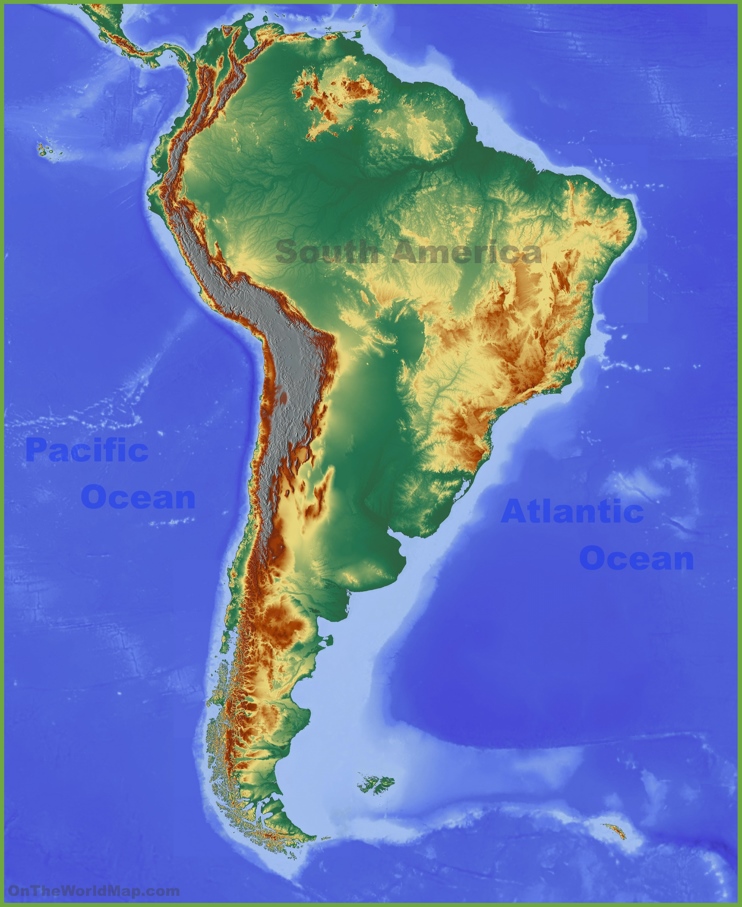
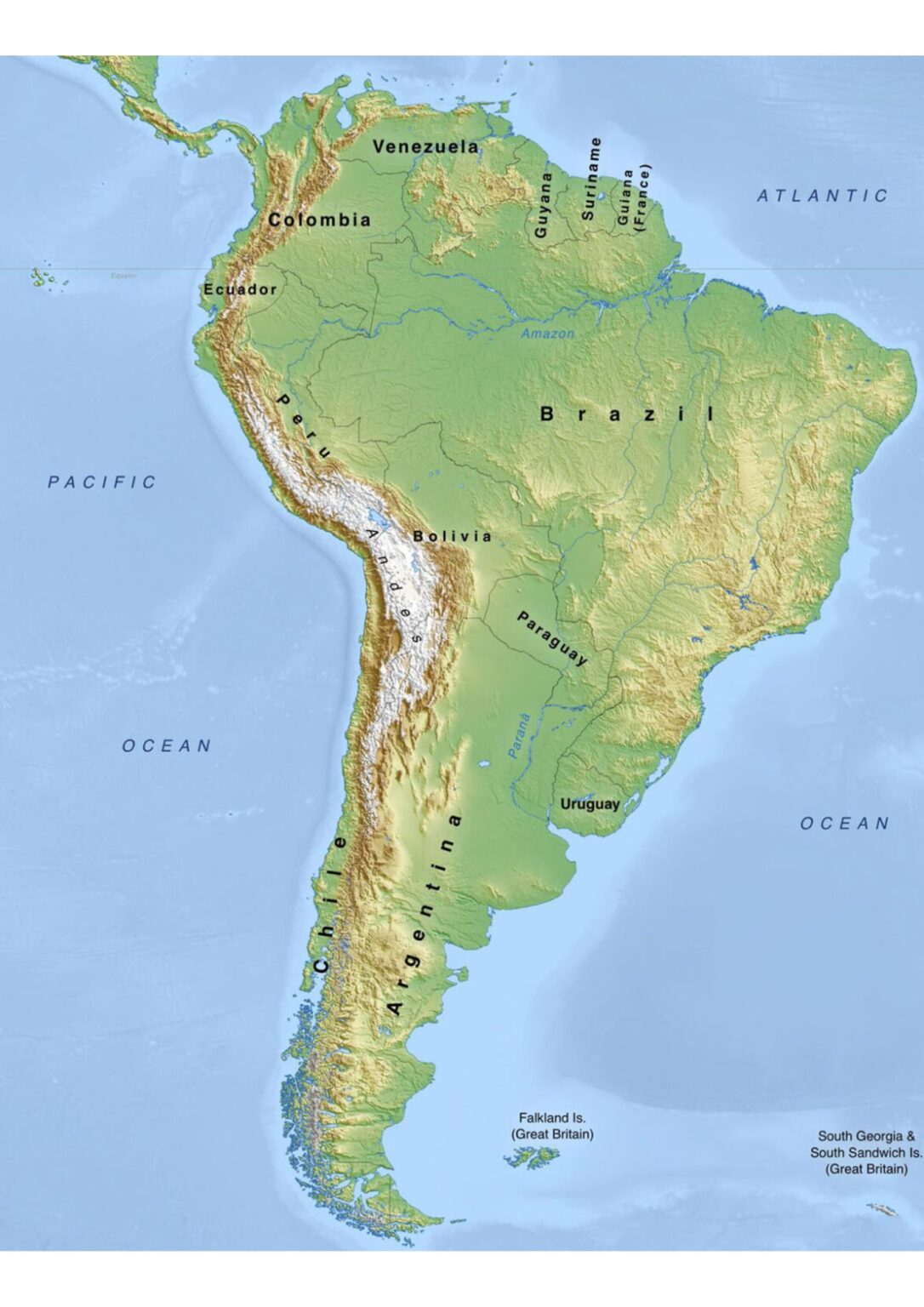
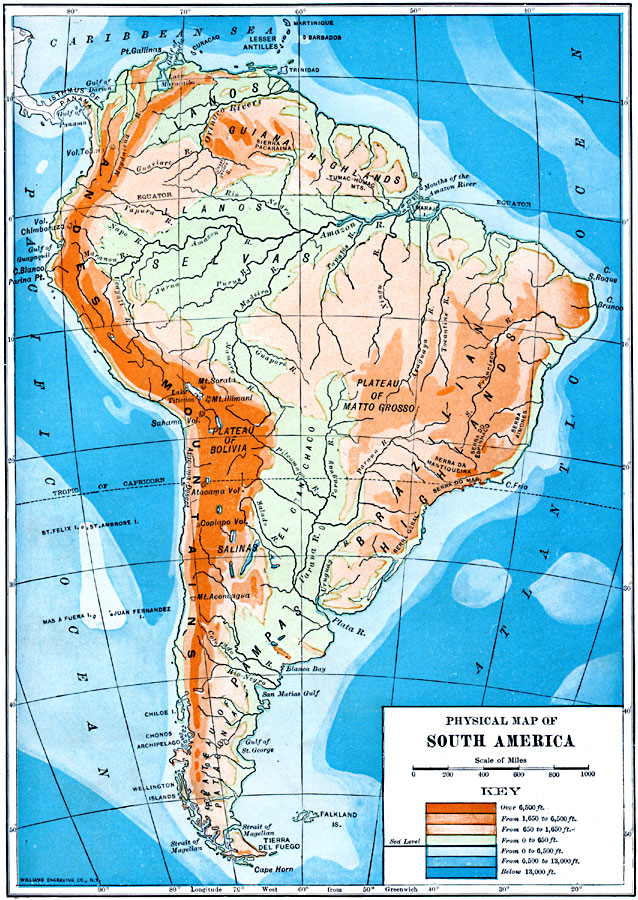
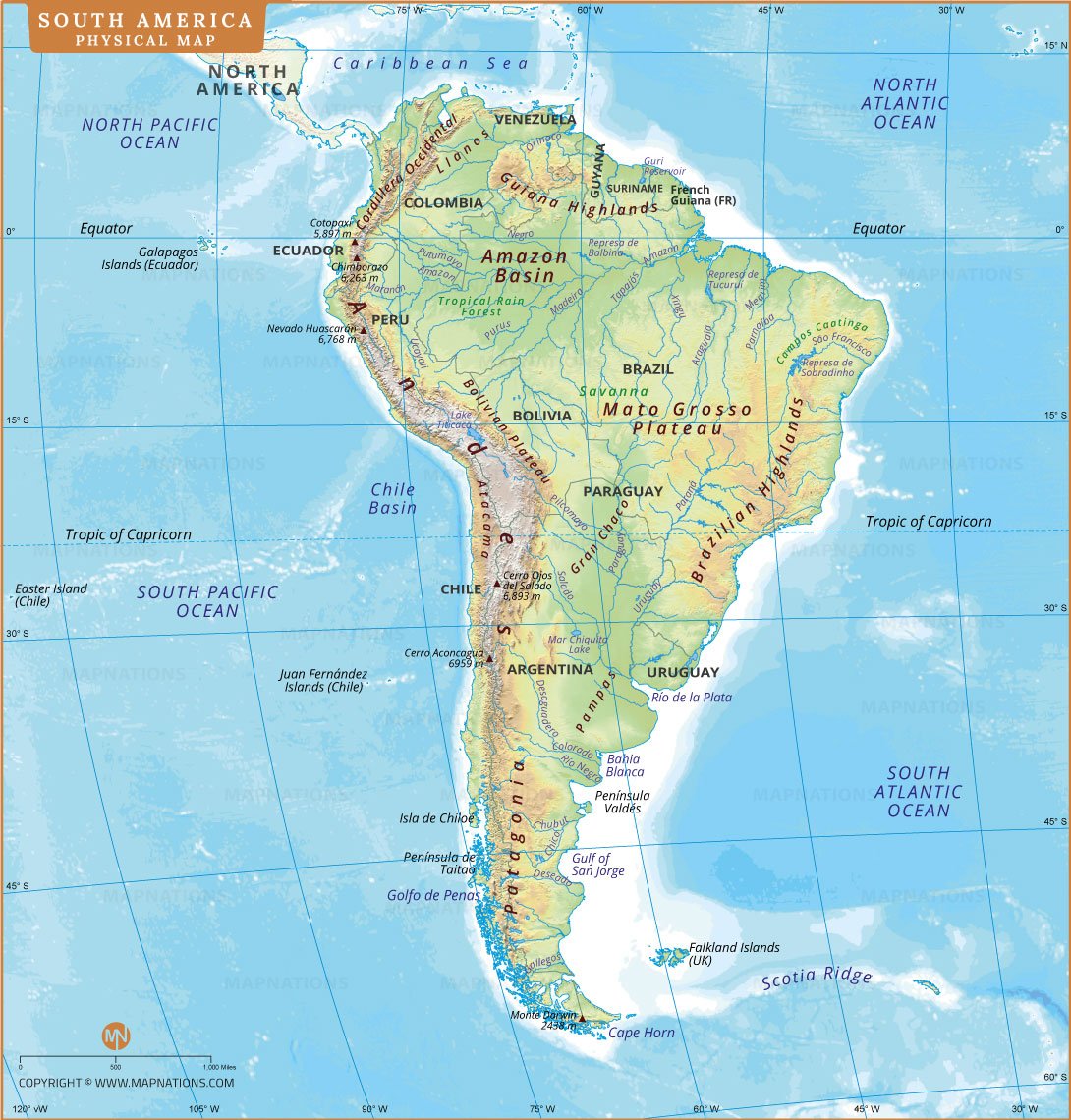
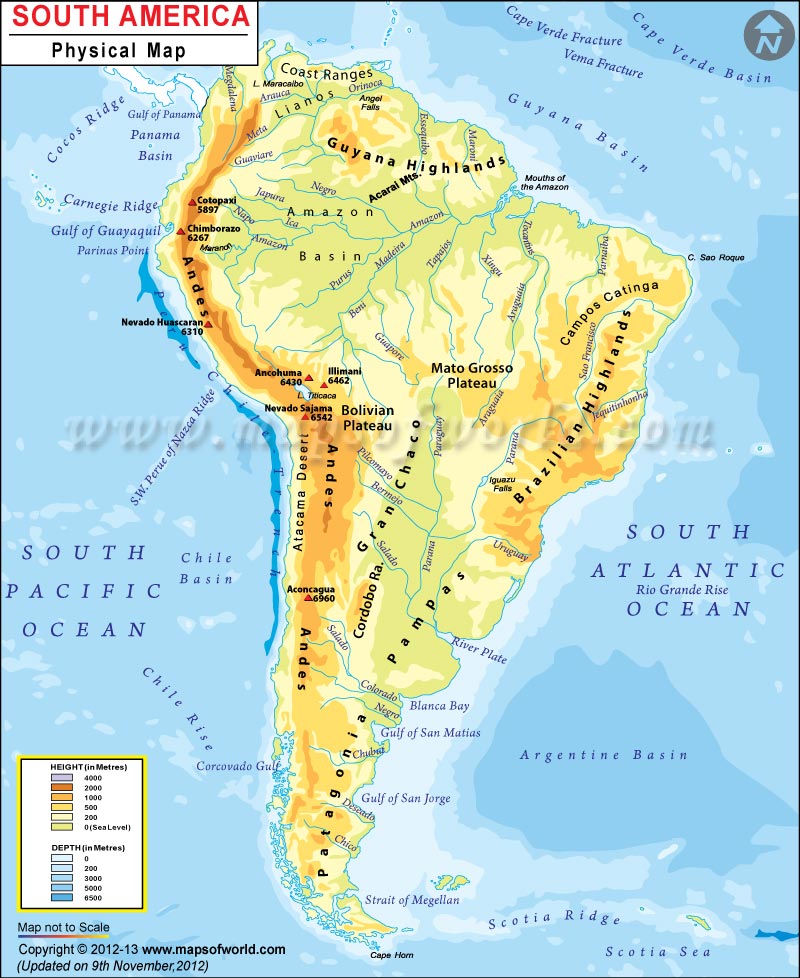
Dominating the western edge of the continent, the Andes Mountains are the world’s longest continental mountain range, stretching over 7,000 kilometers from Venezuela in the north to Chile and Argentina in the south. On a physical map, they appear as a continuous, rugged brown band. This range is home to numerous peaks exceeding 6,000 meters, such as Aconcagua in Argentina, the highest peak in the Western Hemisphere. The Andes are a product of the Nazca Plate subducting beneath the South American Plate, resulting in frequent volcanic and seismic activity. The high-altitude Altiplano plateau, shared by Bolivia and Peru, lies between two major Andean cordilleras and is one of the most populated high-altitude regions on Earth. The mountains dramatically influence the climate, creating rain shadows on the western slope, which produces the Atacama Desert—one of the driest places on the planet—while trapping moisture on the eastern slopes, feeding the Amazon River system.

The Amazon Basin and River System
Stretching across much of northern Brazil, Peru, Colombia, and several other countries, the Amazon Basin is the largest tropical rainforest in the world. The physical map depicts this region as a vast, low-lying green expanse crisscrossed by a dense network of blue lines representing the Amazon River and its countless tributaries. The Amazon River itself is the second-longest river in the world, but it carries more water than any other river system on Earth. The basin’s nearly flat terrain and abundant rainfall create an intricate floodplain ecosystem, including vast areas of igapó (flooded forest) and várzea (seasonally flooded land). This region is critical for global oxygen production, carbon storage, and biodiversity, housing millions of species of plants, animals, and insects. Key tributaries like the Negro, Madeira, and Tapajós rivers are major navigable waterways that historically served as transportation corridors for indigenous peoples and, later, explorers and settlers.
The Brazilian Highlands and Guiana Shield
To the east and north of the Amazon Basin, the physical map reveals two significant highland regions: the Brazilian Highlands and the Guiana Shield. The Brazilian Highlands (or Planalto Brasileiro) cover much of central and eastern Brazil, appearing as a vast, uneven plateau with elevations between 300 and 1,500 meters. This ancient geological formation is rich in minerals like iron ore (in the “Iron Quadrangle”) and supports a biome known as the Cerrado—a tropical savanna with unique biodiversity. The Guiana Shield, located in northern South America (Venezuela, Guyana, Suriname, French Guiana, and northern Brazil), is even older and geologically stable. It features dramatic table-like mountains called tepuis, such as Mount Roraima, which rise abruptly from the surrounding rainforest. These tepuis are home to isolated ecosystems with species found nowhere else on Earth. The Angel Falls in Venezuela, the world’s highest uninterrupted waterfall, plunges from a tepui in the Guiana Shield.
The Pampas and Gran Chaco Plains
South of the Amazon Basin, the physical map shows a transition to extensive lowland plains. The Pampas, stretching across central Argentina, Uruguay, and southern Brazil, are vast, fertile grasslands with gently rolling hills. This region is depicted in soft yellow or tan tones on physical maps, indicating its agricultural productivity. The Pampas are the heart of South America’s ranching and agriculture, producing beef, wheat, corn, and soybeans. To the north of the Pampas lies the Gran Chaco, a hot, semi-arid lowland plain covering parts of Paraguay, Bolivia, and Argentina. The Chaco is characterized by thorny forests, scrublands, and seasonal wetlands. Unlike the productive Pampas, the Gran Chaco is less densely populated and challenging to develop, but it is ecologically important for species like the jaguar and giant anteater. The physical map clearly differentiates these two plains by color and texture: the Pampas appear smoother and more uniform, while the Chaco shows a more irregular, patchy pattern.
The Atacama Desert and Patagonian Steppe
Along the west coast of the continent, the physical map reveals two starkly contrasting arid environments. The Atacama Desert, located in northern Chile between the Pacific Ocean and the Andes, is one of the driest non-polar deserts on Earth. The physical map shows this area as a narrow strip of orange or tan, indicating extreme aridity and minimal vegetation. Some weather stations in the Atacama have never recorded rainfall. In contrast, Patagonia, at the southern tip of the continent spanning Chile and Argentina, appears as a windswept, cold desert plateau. The Patagonian steppe is characterized by strong winds, low precipitation, and sparse grasses and shrubs. The physical map of this region highlights the rugged coastline with fjords, glaciers, and the inhospitable Tierra del Fuego archipelago. The spectacular Perito Moreno Glacier in Los Glaciares National Park is a notable glacial feature that advances and retreats, providing dramatic evidence of ongoing climate processes.
Coastal Features and Major Islands
The coastline of South America, as outlined on any physical map, is relatively straight compared to other continents, with few major indentations. The most significant coastal features include the Caribbean coast in the north, with its numerous islands and coral reefs, and the Atlantic coast of Brazil, featuring many natural harbors like Guanabara Bay in Rio de Janeiro. The Pacific coast is generally steep and rocky, with few good harbors except for the Gulf of Guayaquil in Ecuador. Notable islands include Tierra del Fuego at the southern tip (shared by Chile and Argentina), the Galápagos Islands belonging to Ecuador, and the Falkland Islands (Islas Malvinas). The Galápagos are famously volcanic and isolated, known for the unique wildlife that inspired Charles Darwin’s theory of evolution. The map also shows the mouths of major rivers, such as the Amazon, which creates a massive delta region that extends far into the Atlantic Ocean, influencing ocean currents and marine life.
Climate and Ecosystem Variations
The physical features of South America create a wide array of climate zones. The Andes produce a vertical zonation of climates, from tropical at the base to alpine tundra and permanent ice at the peaks. The Amazon Basin remains hot and humid year-round, with heavy rainfall. The Brazilian Highlands have a distinct wet and dry season, while the Pampas experience a temperate climate with moderate rainfall. The Atacama Desert is nearly rainless, and Patagonia is cold and arid. These climates in turn support distinct ecosystems: the Amazon rainforest, the Cerrado savanna, the Pampas grasslands, the Patagonian steppe, and the high-altitude puna grasslands. Each ecosystem has adapted to the specific physical conditions. For example, the puna in the high Andes supports hardy grasses and camelids like the llama and vicuña. Understanding this interplay between physical geography and climate is essential for comprehending the distribution of human populations, agriculture, and natural resources across the continent.
Conclusion
A thorough study of the South America physical features map reveals a continent of extraordinary geographical diversity. From the towering Andes to the vast Amazon Basin, from the fertile Pampas to the stark Atacama Desert and the ancient Guiana Shield, each landform tells a story of geological processes and climatic influences spanning millions of years. This physical geography directly shapes the economies, cultures, and ecosystems found throughout South America. Whether you are a student, traveler, or geography enthusiast, recognizing these patterns on a map provides deeper appreciation for the natural forces that have sculpted this remarkable continent.
PHYSICAL MAP SOUTH AMERICA Diagram | Quizlet

PHYSICAL MAP SOUTH AMERICA Diagram | Quizlet
Physical Map Of South America Physical South America Map | Premium
Physical Map Of South America Physical South America Map | Premium
Physical Map Of South America Physical 3D Map Of South America

Physical Map Of South America Physical 3D Map Of South America
South America Physical Features Map

south america physical features map
South America Physical Features Map
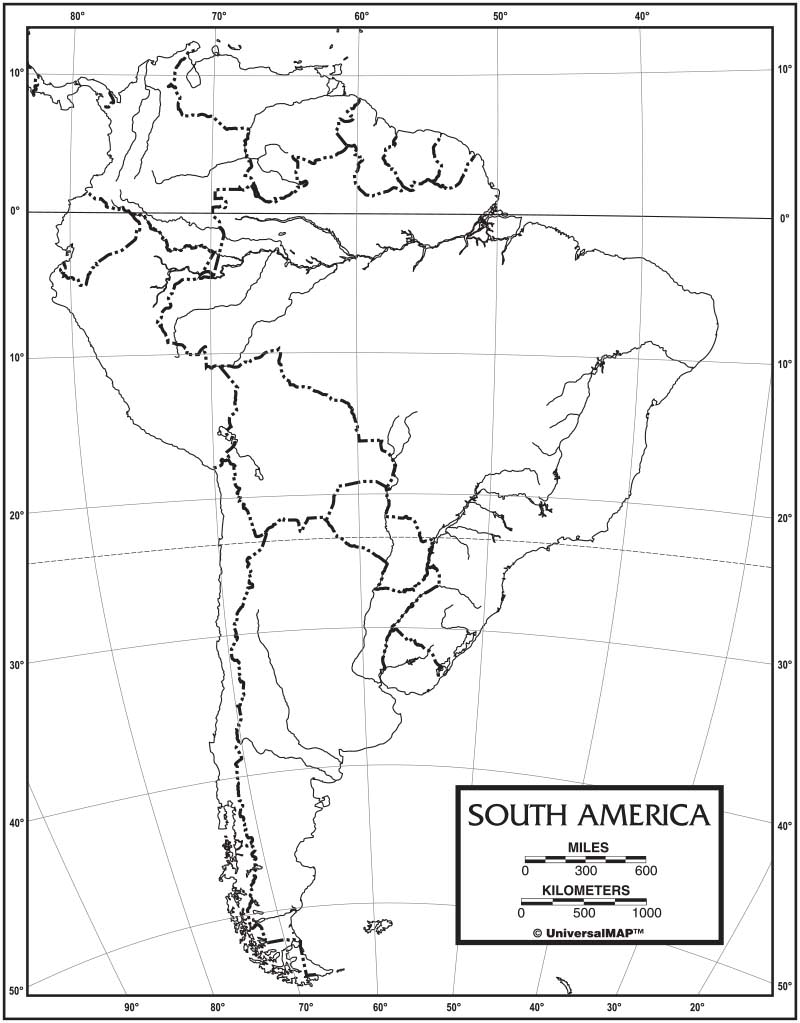
south america physical features map
Vibrant, Highly Detailed Physical Map Of South America Showcases
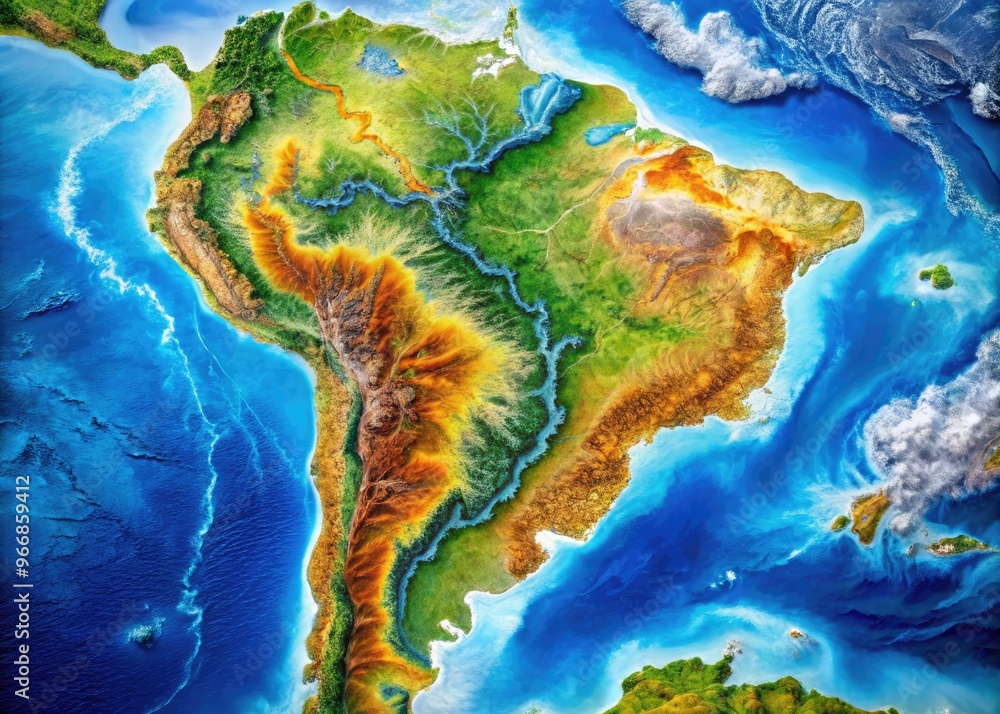
Vibrant, highly detailed physical map of South America showcases ...
Physical Map Of South America Physical South America Map | Premium
Physical Map Of South America Physical South America Map | Premium
Physical Features Of South America

Physical features of south america
Physical Map South America , Physical Map Of South America – TLWK
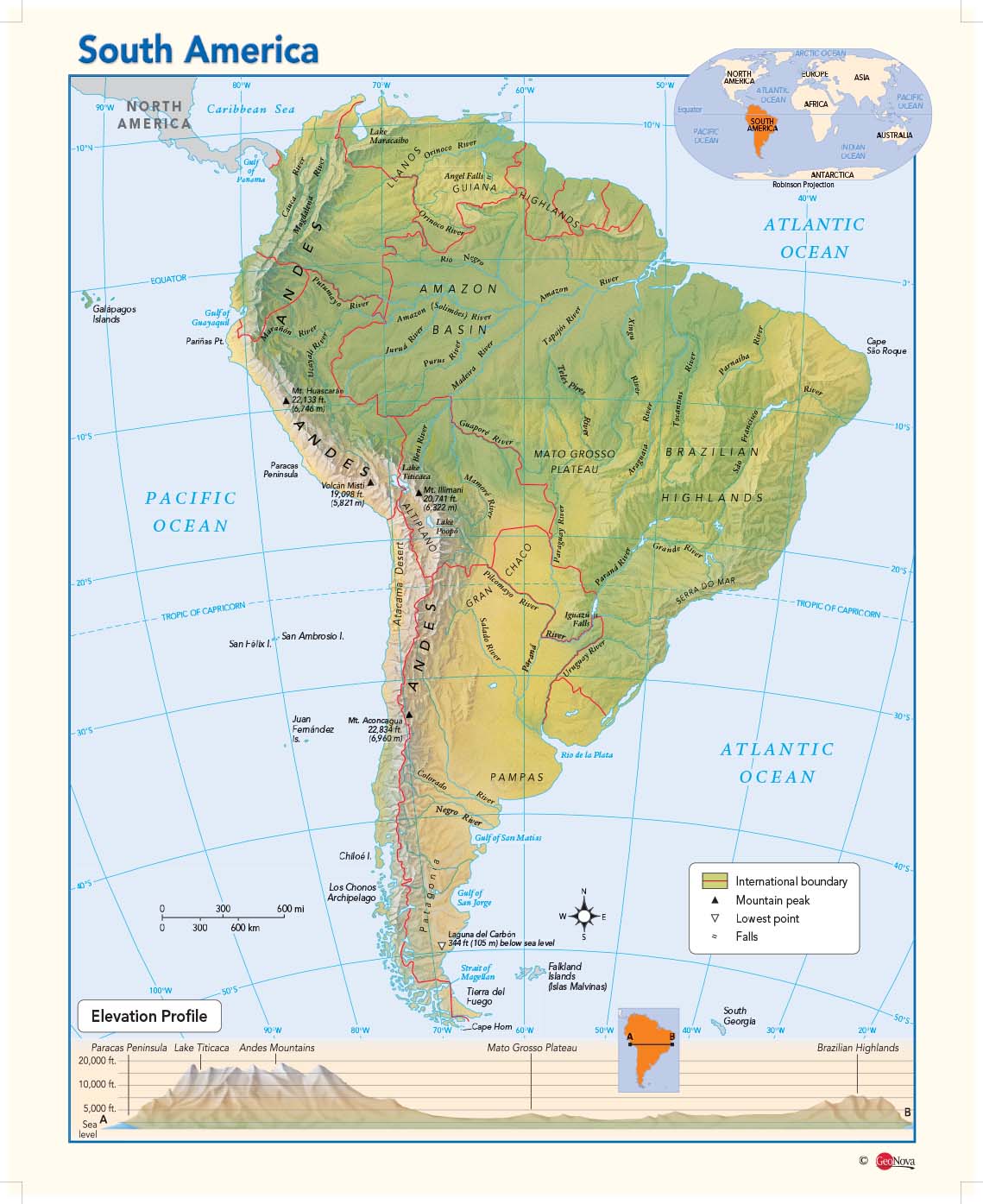
Physical Map South America , Physical Map of South America – TLWK
Physical Map Of South America Physical South America Map | Premium

Physical Map Of South America Physical South America Map | Premium
Physical Map Of South America Printable - Printable Free Templates

Physical Map Of South America Printable - Printable Free Templates
South America Physical Features Map
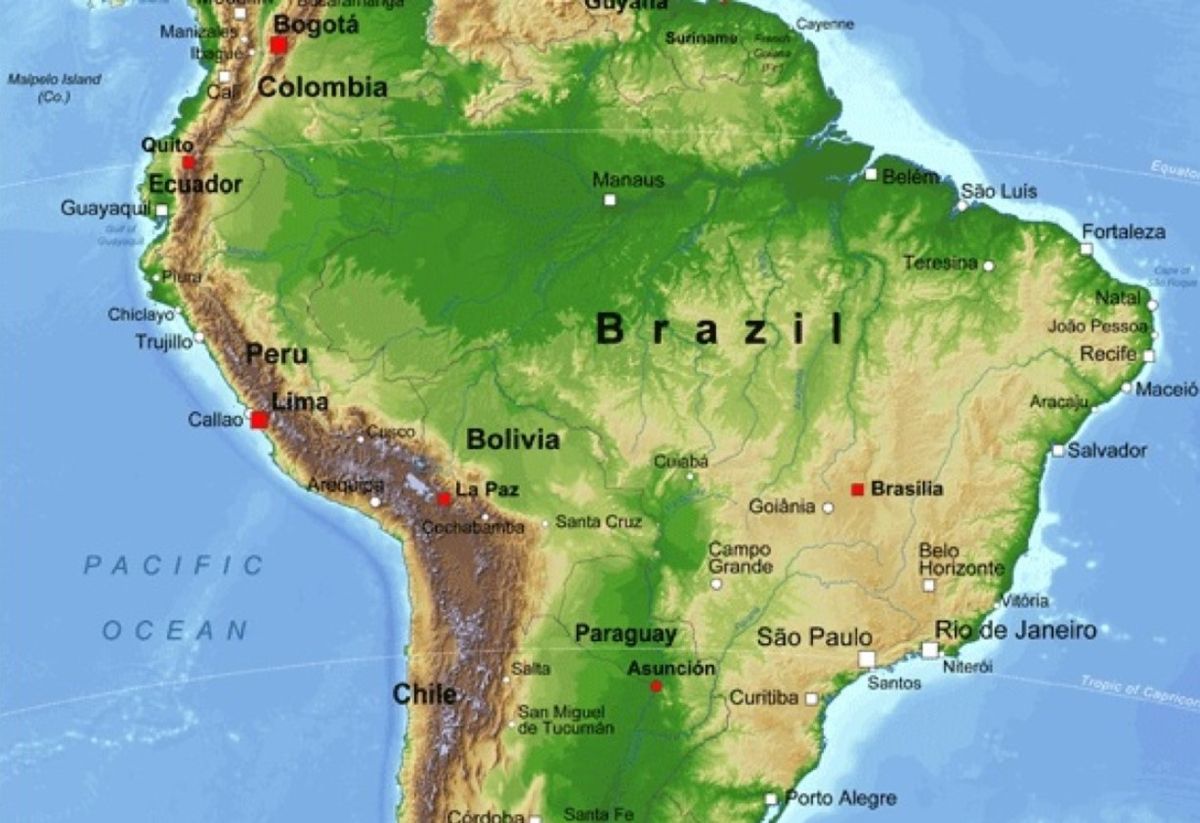
south america physical features map
Physical Features Of South America
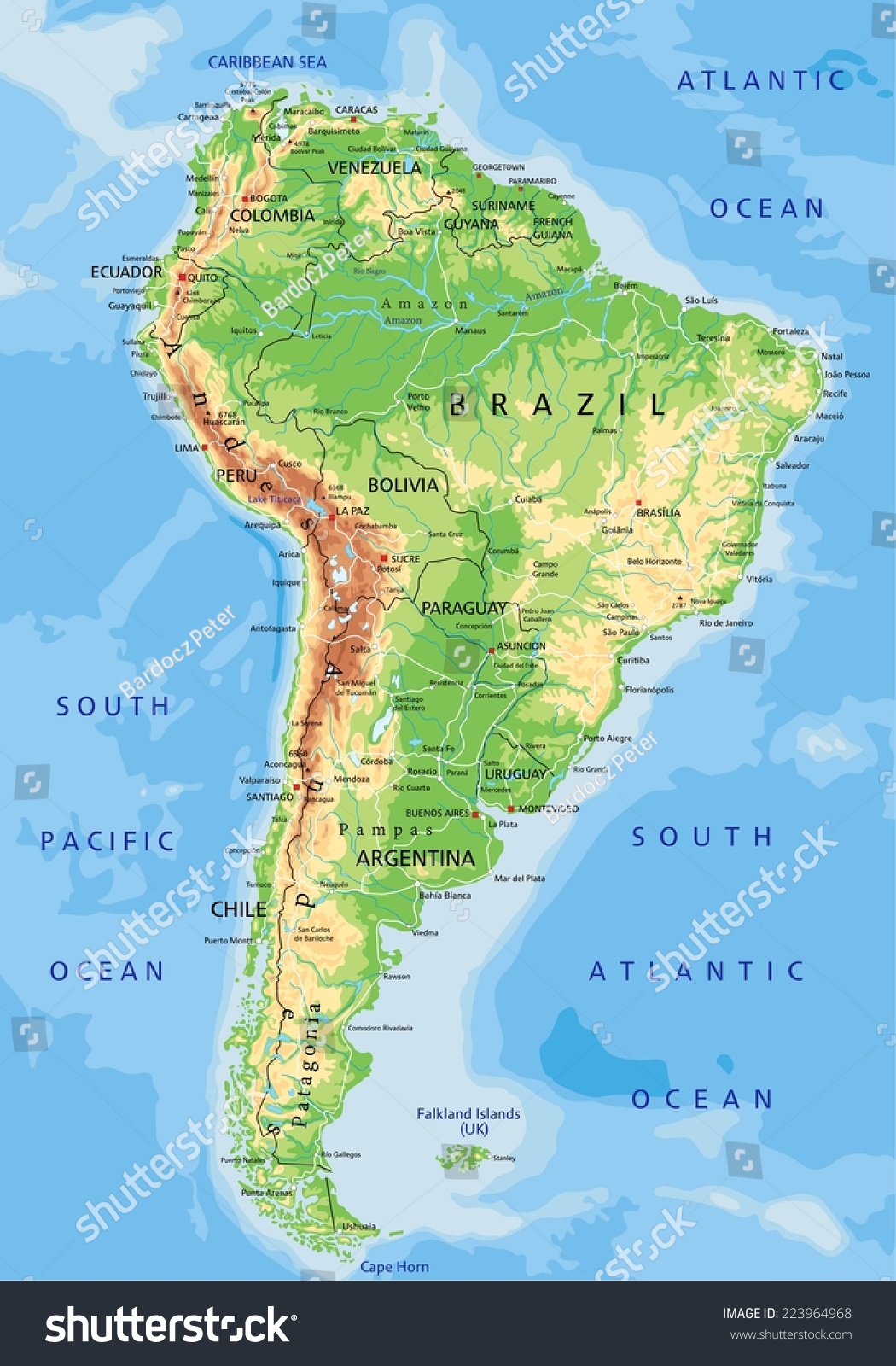
physical features of south america
South America Physical Features Map

south america physical features map
Map Of South America Physical Features
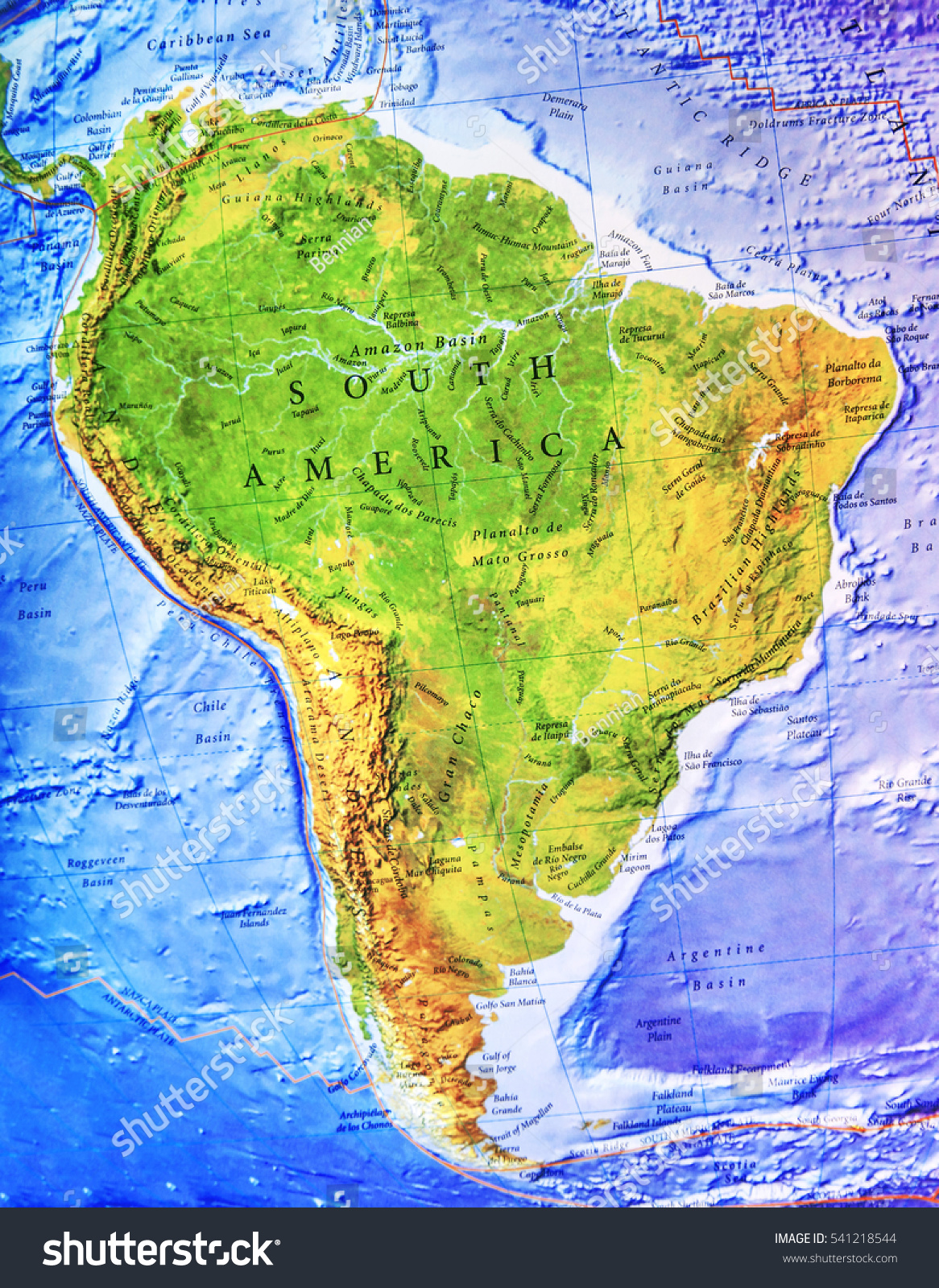
Map of south america physical features
Physical Map Of South America Physical 3D Map Of South America
Physical Map Of South America Physical 3D Map Of South America
South America Physical Features Map Physical Map Of South America,
South America Physical Features Map Physical Map Of South America,
South America Physical Map Physical Map Of South America – Artofit

South america physical map physical map of south america – Artofit
Physical Map Of South America Ezilon Maps

Physical Map Of South America Ezilon Maps
Physical Map Of South America Printable - Printable Free Templates
Physical Map Of South America Printable - Printable Free Templates
Physical Map Of South America - Ontheworldmap.com
Physical map of South America - Ontheworldmap.com
Physical Map Of South America | Landform Features
Physical Map Of South America | Landform Features
Map Of South America Physical Features

Map of south america physical features
The Times Map Of South America (Physical Features) By Times Maps

The Times Map of South America (Physical Features) by Times Maps ...
Physical Features Of South America | Teaching Resources

Physical Features of South America | Teaching Resources
The Times Map Of South America (Physical Features) By Times Maps

The Times Map of South America (Physical Features) by Times Maps ...
South America Physical Features - Labelled Diagram

South America Physical Features - Labelled diagram
South America Physical Map Printable
South America Physical Map Printable
South America Physical Features Map

south america physical features map
File:Physical Features Of South America Map By Tom Patterson.jpg

File:Physical Features of South America map by Tom Patterson.jpg ...
South America Physical Map – Mountains, Rivers & Terrain Features
South America Physical Map – Mountains, Rivers & Terrain Features
South America Physical Features Map
South america physical features map
The Times Map Of South America (Physical Features) By Times Maps

The Times Map of South America (Physical Features) by Times Maps ...